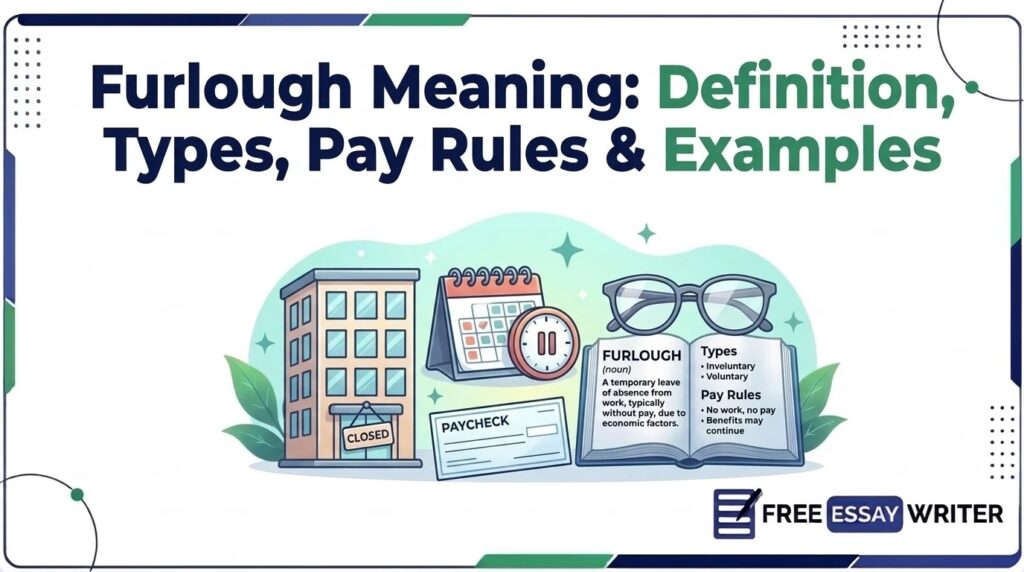
A news anchor reports that thousands of government workers face furloughs, and many viewers pause at the word. Some think it means firing, while others think it means a paid vacation. The furlough meaning most people need is a temporary unpaid leave that keeps the job open.
Students who read our integrity meaning guide know one word can hold several precise senses. Furlough carries separate meanings in employment, the military, and the justice system.
This guide explains each meaning, the origin of the word, and how furloughs differ from layoffs and leave. It also covers example sentences, common mistakes, a checklist, and frequent questions about correct usage.
Quick Answer: What Does Furlough Mean?
Furlough means a temporary leave from work or duty, usually unpaid in jobs and approved in military service. Furloughed employees keep their jobs and return when the employer recalls them. The word can also mean a short approved release from prison, so context decides the sense.
Furlough Meaning at a Glance
The word furlough works in several fields, and each field adds detail to the basic idea. The table below lists the main senses readers meet in news, history, and law:
Context
Furlough meaning
Paid or unpaid
Example
Employment
Required temporary leave from work
Usually unpaid
Factory workers on furlough
Government
Leave during a funding lapse
Unpaid, back pay often follows
Federal staff during a shutdown
Military
Approved leave from active duty
Usually paid
A soldier home on furlough
Justice system
Short approved release from prison
Not applicable
Furlough for a family funeral
Verb use
To place someone on leave
Depends on context
The firm furloughed 200 staff
Every sense shares one core idea, which is a temporary absence that an authority approves or requires.
What Is the Definition of Furlough?
Furlough is a noun and a verb that describe a temporary leave that an authority approves or requires. As a noun, it names the leave itself, as in the phrase two week furlough. As a verb, it describes placing someone on leave, as in the company furloughed its staff.
In simple words, a furlough is a pause in work or duty, not an end to it. The person keeps a link to the job, unit, or institution throughout the furlough period. That continuing link separates furlough from firing, resignation, or a permanent military discharge.
How to Pronounce Furlough
Furlough sounds like “FUR low,” with the stress on the first syllable of the word. The final letters sound like “oh,” much as they do in the word dough. Many readers stumble at first because English spells that same sound in several ways.
Parts of Speech for Furlough
Furlough appears as a noun, a verb, and an adjective form in everyday English writing. The table below shows each form with a short example sentence for quick reference:
Form
Word
Example sentence
Noun
Furlough
The furlough lasted three weeks for every worker.
Verb
Furlough
The museum will furlough guides during winter months.
Past tense
Furloughed
The airline furloughed pilots after demand dropped.
Adjective use
Furloughed
Furloughed staff received updates by email each week.
Writers use the noun most often in reports and the past tense form most often in news headlines.
Where Does the Word Furlough Come From?
The word furlough comes from the Dutch word “verlof,” which means leave or permission. English speakers borrowed it in the early 1600s, mostly in military settings. Early spellings included “furloff” before the modern spelling with “ough” became standard.
The Dutch term itself links to older Germanic words about allowing or granting permission. Military writers used furlough for soldiers who received approved time away from their posts. Over centuries, the word spread from army camps into government offices and private workplaces.
Furlough began as a soldier’s word for permission to leave, and it still means approved absence. Modern readers mostly meet it in employment news, yet the military meaning remains alive. Historians and novelists often use the older sense in stories about wartime soldiers.
Furlough Meaning in Employment
In business, a furlough is a temporary unpaid leave that an employer requires during hard times. Companies use furloughs to cut labor costs without losing trained staff permanently. Employees usually keep their job titles and often keep some benefits like health insurance.
Furloughs can take two common forms, depending on how the employer cuts working hours. Some employers stop all work for a set period, while others cut hours across each week. The table below separates both forms across the points workers ask about most:
Feature
Full furlough
Partial furlough
Work during the period
None
Reduced hours
Pay during the period
Usually none
Pay for hours worked
Typical length
Days to months
Weeks to months
Common example
Plant shutdown
Four day work weeks
A partial furlough keeps some income flowing, while a full furlough stops pay until the employer recalls workers.
Why Do Employers Use Furloughs?
Employers turn to furloughs when revenue falls but leaders expect business to recover later. Hotels, airlines, theaters, and factories often furlough staff during slow seasons or crises. Keeping trained workers saves hiring and training costs once customer demand returns later.
Furloughs also let employers act faster than formal layoff processes in many cases. Workers stay connected to the company, which helps morale more than permanent job cuts. The practice still causes stress because most furloughed workers lose regular pay during the break.
Do Furloughed Workers Get Paid?
Most private sector furloughs in the United States remain unpaid for the hours not worked. Many states allow furloughed workers to apply for unemployment benefits during the break. Rules differ by state, so workers should check with their state labor department before applying.
Some salaried workers face extra rules because pay law treats partial weeks in special ways. Employers usually consult labor lawyers before furloughing salaried staff for part of a week. Workers with questions about their own pay should ask human resources for written details.
Government Furlough Meaning
Government furloughs happen when an agency lacks funding to pay staff for a period. In the United States, federal furloughs often follow a lapse in appropriations, which people call a shutdown. Workers in roles not marked as excepted stop working until Congress restores agency funding.
Workers in excepted roles keep working during a shutdown, often without immediate pay. A 2019 federal law guarantees back pay to federal employees after a shutdown ends. Federal contractors often lack that same protection, so a shutdown can cost them wages permanently.
A government furlough pauses work and pay, but it does not end the employee’s federal job. Agencies send recall notices once funding returns, and workers resume their normal duties. News coverage during long shutdowns often uses furlough in nearly every headline.
Military Furlough Meaning
In the military, a furlough is an approved leave that lets a service member spend time away. Modern armed forces usually call this “leave,” yet older writing and history books often say furlough. A soldier on furlough remains a member of the service and must return by a set date.
Military furloughs usually include pay, which separates them from most civilian employment furloughs. Soldiers in older wars received furloughs to visit family, recover from illness, or attend events. Letters and diaries from those periods often mention furloughs as the brightest days of service.
Prison Furlough Meaning
In the justice system, a furlough is a short approved release that lets a prisoner leave custody. Prison authorities may grant furloughs for family funerals, medical care, job interviews, or release planning. The prisoner must follow strict conditions and return by a set time.
Furlough programs vary widely across states and countries, and some systems use them rarely. Officials review each request with care, looking at behavior records and public safety factors. The term appears often in legal articles, court records, and criminal justice research.
Furlough in Literature and History
Writers and historians use furlough often when describing soldiers in older wars and long campaigns. Civil War letters, for example, mention furloughs that let soldiers visit families during winter breaks. These records show how much a short leave meant to people far from home.
Novels set in wartime also use the word to mark turning points in a character’s story. A furlough scene often brings a soldier home briefly before a dangerous return to battle. Readers who know the military sense catch the emotional weight these scenes carry.
Furlough vs Layoff: What Is the Difference?
Readers often confuse furloughs with layoffs because both involve losing work hours and pay. The key difference sits in whether the job continues to exist after the break. The table below compares both terms across five points that matter to workers:
Factor
Furlough
Layoff
Job status
Job continues
Job ends or may end
Expected return
Yes, on recall
Not guaranteed
Benefits
Often continue
Usually end
Length
Temporary
Often permanent
Employer intent
Pause costs
Cut positions
A furlough pauses employment, while a layoff ends it or puts it at serious risk.
Furlough vs Leave of Absence
A leave of absence usually starts with an employee request for personal, medical, or family reasons. A furlough usually starts with the employer, which requires the leave for business reasons. The table below separates both terms clearly for writers and human resources teams:
Factor
Furlough
Leave of absence
Who starts it
Employer
Employee, usually
Reason
Business conditions
Personal, medical, or family needs
Pay
Usually unpaid
Paid or unpaid
Job protection
Usually kept
Depends on law and policy
Who starts the leave tells readers which term fits, since employers furlough while employees request leave.
Furlough Meaning in the United Kingdom
British readers met the word often in 2020 and 2021 during the Coronavirus Job Retention Scheme. The government paid a large share of wages for furloughed workers to prevent mass layoffs. Many people still call that program “the furlough scheme” in everyday British speech.
The scheme paid most of a worker’s normal wages up to a monthly cap. That design made the British furlough unlike the unpaid furloughs common in the United States. Readers comparing news from both countries should notice this pay difference before drawing conclusions.
Furlough vs Sabbatical
Readers sometimes mix up furlough and sabbatical because both describe a long break from regular work. A sabbatical is a planned break for study, research, or rest, often with full or partial pay. The table below separates both terms across four points that students and workers notice:
Factor
Furlough
Sabbatical
Who starts it
Employer, usually
Employee, with approval
Main purpose
Cut costs
Study, research, or rest
Pay
Usually unpaid
Often paid
Common setting
Business and government
Universities and large firms
A sabbatical rewards the worker, while a furlough protects the employer’s budget during hard periods.
Tips for Workers Facing a Furlough
A furlough can bring sudden money stress, so early planning helps workers stay steady. Use these tips during the first week of any unpaid furlough at work:
Review the household budget right away and pause any spending that can wait until pay returns.
Apply for unemployment benefits quickly, since many states pay benefits only from the application date.
Ask lenders and landlords about short payment plans before missing any scheduled bill or rent.
Keep work skills fresh with free online courses, so returning to the job goes smoothly and confidently.
Stay in touch with managers through official channels to hear recall news as early as possible.
Example Sentences Using Furlough
Example sentences show how careful writers use furlough naturally in each context and field. The sentences below follow standard usage in news, history, and business writing.
Employment Examples
The hotel chain furloughed three hundred workers after tourism dropped during the winter season. Maria returned to the factory after a six week furlough ended in early spring. The company promised that furloughed staff would keep their health insurance during the break.
Government Examples
The shutdown forced thousands of federal employees into unpaid furlough for several weeks. Park rangers on furlough could not open visitor centers until funding returned. Congress passed a bill that restored pay for every furloughed federal worker.
Military and Historical Examples
The young soldier spent his furlough on the family farm before returning to camp. Letters from the war describe furloughs as short and precious breaks from hard duty. His commanding officer granted a ten day furlough after the long campaign ended.
Furlough Meaning in Different Industries
Furloughs look different across industries because each sector faces its own business cycles and rules. The examples below show how the same word plays out in several common workplaces.
Airlines and Travel
Airlines often furlough pilots, flight attendants, and ground staff when travel demand drops sharply. Union contracts usually set the order of furloughs and recalls based on seniority lists. Pilots on furlough sometimes keep their training current so they can return quickly once flights increase.
Hotels and Hospitality
Hotels and restaurants furlough staff during slow seasons, renovations, or sudden drops in tourism. Seasonal resorts may furlough workers every winter or summer as part of a normal yearly cycle. Many hospitality workers plan for these breaks by saving money or finding short seasonal jobs.
Manufacturing
Factories sometimes furlough workers when supply shortages stop production lines for weeks at a time. Automakers have used rolling furloughs while waiting for parts like computer chips or engines. Workers usually return once parts arrive and production schedules reach normal levels again.
Education and Public Services
Universities, school districts, and city governments sometimes furlough staff during budget shortfalls. These furloughs often take the form of unpaid days spread across a school year. Staff lose a small share of pay, but the employer avoids cutting positions permanently.
Key Characteristics of a Furlough
Every type of furlough shares a few features, even when pay and length differ widely. The key characteristics include the following points that define the term in any field:
A furlough is always temporary, with an expected return to work, duty, or custody afterward.
An authority approves or requires the furlough, such as an employer, commander, or prison official.
The person keeps a formal link to the job, unit, or institution throughout the furlough period.
Pay depends on the context, with civilian furloughs usually unpaid and military furloughs usually paid.
A clear start date appears in most furloughs, though the end date sometimes remains open.
Recall notices or set return dates mark the end of the furlough in most workplaces.
Questions to Ask During a Workplace Furlough
Workers facing a furlough often worry about pay, benefits, and their future at the company. Asking clear questions early helps workers plan their budgets and protect their rights.
How Long Will the Furlough Last?
Ask human resources for the expected length or the conditions that will end the furlough. Some employers set fixed dates, while others tie the recall to sales or funding targets. Written answers help workers plan rent, bills, and job searches during the break.
Which Benefits Continue During the Break?
Ask whether health insurance, retirement contributions, and paid leave balances continue during the furlough. Some employers pay the full insurance premium, while others ask workers to cover their share. Workers should request written benefit details before the furlough begins whenever possible.
Can Workers Take Other Jobs Meanwhile?
Some employers allow furloughed workers to take temporary jobs, while others restrict outside work. Ask about any rules before accepting a short job with another company. Clear written permission prevents conflicts when the original employer recalls workers later on.
Test Questions to Check Furlough Knowledge
Teachers and tutors often use short questions to check whether students grasp the word correctly. The questions below test the main ideas covered earlier in this practical guide.
Which Language Gave English the Word Furlough?
English borrowed furlough from the Dutch word verlof, which means leave or permission to go. The borrowing happened in the early 1600s, mostly through military contact and soldier speech.
Is a Furloughed Worker Still Employed?
Yes, a furloughed worker remains employed, although work and pay usually stop for a period. The employer expects to recall the worker once business conditions or funding improve again.
Synonyms and Related Words for Furlough
Several words share part of the furlough meaning, but none match it exactly in every context. Writers should choose synonyms carefully because each word adds its own shade of meaning. Common related words include leave, layoff, sabbatical, suspension, and temporary release from custody.
“Leave” works well in military and personal contexts but lacks the employer driven sense of furlough. “Sabbatical” describes a planned break for study or rest, often with pay, which furlough rarely offers. “Suspension” suggests a penalty, so writers should avoid it unless discipline is involved.
Tips for Using Furlough Correctly in Writing
Students and professionals can avoid common errors with a few simple habits. Use these tips when writing essays, reports, or emails that include the word:
Use furlough only for temporary absences, and choose layoff when the job ends permanently.
Spell the word with “ough” at the end, and avoid the common misspelling “furlow” in formal writing.
State whether the furlough is paid or unpaid when the detail matters to the reader’s knowledge.
Add the expected length of the furlough when possible, since readers often ask how long it lasts.
Match the sense to the field, using military leave or prison release meanings only in fitting contexts.
Avoid using furlough as a softer word for firing, because that misleads readers and affected workers.
How to Use Furlough in an Essay Step by Step
Students writing about labor, history, or government often need to use furlough accurately in essays. The steps below help writers handle the term with clarity and precision.
Step 1: Define the Term Early
Introduce furlough with a short definition the first time it appears in the essay. Readers who meet the word for the first time then follow the argument without confusion. A one sentence definition keeps the flow smooth and avoids long side explanations.
Step 2: Choose the Right Sense
Decide whether the essay discusses employment, government, military, or prison furloughs before writing further. Mixing senses without warning confuses readers and weakens the essay’s central argument quickly. Keep one sense throughout unless the essay compares several meanings on purpose.
Step 3: Support Claims With Evidence
Cite official sources such as labor department pages or government reports when stating furlough facts. Numbers about furloughed workers change often, so writers should note the date of each figure. Strong evidence makes the essay more convincing for teachers and other readers.
Step 4: Compare Related Terms
Show the difference between furlough, layoff, and leave when the essay discusses job losses. A short comparison helps readers grasp why the distinction matters for workers and employers. Readers of our ach meaning guide will follow payroll details more easily.
Step 5: Proofread for Spelling and Tense
Check the spelling of furlough and furloughed in every paragraph before submitting the essay. Confirm that verb tenses match the time period the essay describes in each section. A final read aloud catches awkward phrasing, missing words, and repeated words quickly.
Real World Example: A Student Report on Furloughs
A college student wrote a report about a local theater that furloughed staff during a long renovation. The first draft called the furlough a layoff, which upset a theater manager who reviewed the report. The manager explained that every worker kept their position and would return after reopening.
The student revised the report and added a short section comparing furloughs with layoffs. The final version earned a strong grade because it used precise terms and clear evidence. The student now checks every labor term against a dictionary before writing about workplace topics.
Common Mistakes With the Word Furlough
Many writers misuse furlough in small ways that change the meaning of a sentence. The mistakes below appear often in student essays, emails, and online posts.
1. Treating Furlough as Firing
Some writers use furlough when a company permanently cuts jobs, which gives readers the wrong picture. Furloughed workers expect to return, while fired or laid off workers usually do not. Do not call a permanent job cut a furlough, even if the employer uses gentle language.
2. Misspelling the Word
Common misspellings include furlow, furlogh, and furloe, especially in quick messages and social posts. The “ough” ending trips writers because English uses it for several different sounds. Spell checkers usually catch the error, but careful writers should learn the spelling directly.
3. Assuming All Furloughs Are Unpaid
Military furloughs usually include pay, and some government programs paid furloughed workers large shares of wages. Writers who assume every furlough lacks pay may spread wrong information to their readers. Check the specific program or employer before stating pay details in any text.
4. Confusing Furlough With Vacation
A vacation is a chosen break that workers usually plan and enjoy with pay. A furlough is often imposed by the employer, and it usually brings financial stress instead of rest. Writers should keep these terms separate to respect the experience of affected workers.
5. Ignoring Context in Historical Texts
Readers of older books sometimes apply the modern employment sense to a soldier’s furlough. That mistake turns a happy family visit into a sad job loss in the reader’s mind. Check the setting and time period before deciding which furlough meaning a writer intended.
Furlough Meaning Checklist
Use this checklist before including the word furlough in any essay, report, or professional message:
The writer has confirmed that the absence is temporary and the job or duty continues afterward.
The text identifies the correct field, such as employment, government, military, or justice system use.
The writer has stated whether the furlough is paid or unpaid when readers need that detail.
Furlough is spelled correctly, with furloughed used for past tense and adjective forms throughout.
The text separates furlough from layoff and leave of absence when both ideas appear together.
Facts about furlough programs come from official sources and include the date of each figure.
Frequently Asked Questions
What Is the Simple Furlough Meaning?
The simple furlough meaning is a temporary leave from work or duty that an authority approves or requires. In most modern jobs, a furlough is unpaid, and the worker returns once the employer recalls them.
Is a Furlough the Same as Being Fired?
A furlough is not the same as being fired, because the job continues to exist during the break. Fired workers lose their positions permanently, while furloughed workers usually expect to return later.
Do Furloughed Employees Keep Their Benefits?
Many furloughed employees keep health insurance and other benefits, though policies differ by employer. Workers should ask human resources for written details about benefits during any furlough period.
Can Furloughed Workers Collect Unemployment?
In many US states, furloughed workers can apply for unemployment benefits during unpaid furlough periods. Each state sets its own rules, so workers should check with their state labor department first.
What Does Furlough Mean in the Military?
In the military, furlough means an approved leave that lets a service member spend time away from duty. Modern forces usually say leave, but the furlough meaning still appears in older records and history books.
What Does Furlough Mean in Prison?
In prison, furlough means a short approved release that lets an inmate leave custody for a specific purpose. Common reasons include family funerals, medical care, and job interviews before a planned release date.
How Long Does a Furlough Last?
A furlough can last a single day, several weeks, or many months, depending on the employer and situation. Government furloughs usually end when funding returns, while business furloughs end when demand recovers.
Where Does the Word Furlough Come From?
Furlough comes from the Dutch word “verlof,” which means leave or permission to go away. English speakers borrowed the furlough meaning in the early 1600s, mainly in military settings.
Is Furlough a Noun or a Verb?
Furlough works as a noun and as a verb in standard English writing. The noun names the leave itself, while the verb describes placing someone on that temporary leave.
What Is the Difference Between Furlough and Layoff?
A furlough pauses employment for a set period, while a layoff ends the job or risks it. The furlough meaning always includes an expected return, which a layoff does not promise.
Key Takeaways
The furlough meaning is a temporary leave from work or duty that an authority approves or requires.
In modern employment, furloughs are usually unpaid, and workers keep their jobs during the break.
Government furloughs often follow funding lapses, and federal workers now receive back pay afterward.
Military furloughs describe approved leave from duty and usually include regular pay for the service member.
Prison furloughs allow short approved releases for funerals, medical care, or job interviews.
The word comes from the Dutch term “verlof,” which means leave or permission to go away.
A furlough pauses employment, while a layoff ends the job or places it at serious risk.
A leave of absence usually starts with the employee, while a furlough usually starts with the employer.
The British furlough scheme paid most wages, unlike common unpaid furloughs in the United States.
Writers should spell the word correctly and state pay details when they matter to readers.
Context decides which furlough meaning a writer intends in news, history, or legal texts.
Final Thoughts
The furlough meaning centers on one simple idea, a temporary absence that an authority approves or requires. In workplaces, that absence is usually unpaid, while in the military it usually includes pay. In prisons, the word describes a short supervised release for a specific and approved purpose.
Writers who define the term early, choose the right sense, and compare related words write clearer essays. Careful use of furlough also shows respect for workers who face the stress of unpaid leave. Explore more word meaning guides and writing tools on Free Essay Writer for every assignment.



 Muhammad Bilal
Read more