November 26, 2026 · Muhammad Bilal
Bussin Meaning: Definition, Origin, Usage & Examples in Slang
A teenager takes one bite of a fresh burger and declares that it is bussin. A parent at the same…
 Muhammad Bilal
Read more

Muhammad Bilal
Content Writer
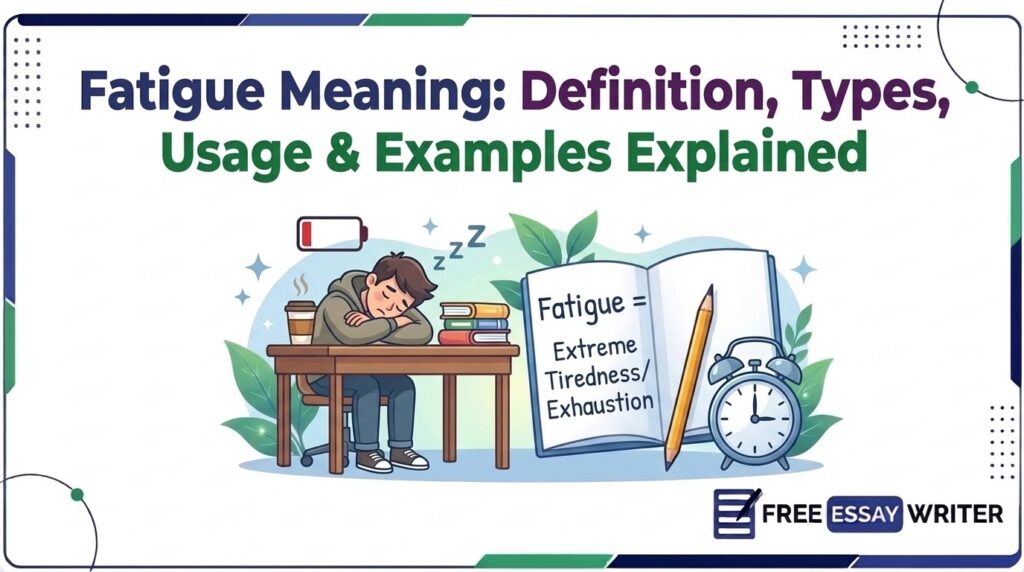
A nurse finishes a double shift and tells a coworker that the fatigue feels heavier than normal tiredness. An engineer on the same day writes a report about metal fatigue in an old bridge beam. Both use the same word with different meanings, so many readers search for the fatigue meaning online.
This guide explains what fatigue means in everyday English, medicine, science, the military, and modern slang. Readers who study emotional words may also like our guide on solace meaning for related vocabulary. The sections below cover definitions, pronunciation, origin, grammar, types, synonyms, mistakes, and example sentences.
Definitions here follow the patterns found in major dictionaries such as Merriam Webster, Oxford, and Cambridge. Health notes reflect general public guidance from medical organizations, and they do not replace advice from a doctor.
Fatigue means extreme tiredness or exhaustion that comes from physical work, mental effort, illness, or stress. Unlike normal sleepiness, fatigue often lingers even after rest and lowers energy, focus, and motivation. In engineering, fatigue also means the weakening of a material after repeated stress. The plural word “fatigues” refers to military work clothing in everyday speech.
Fatigue is a noun that describes a state of deep tiredness that reduces physical or mental energy. A person with fatigue may feel weak, slow, foggy, or unable to finish normal daily tasks. The feeling can last for hours, days, or much longer depending on its cause.
The word also works as a verb meaning to make someone deeply tired through effort or strain. A sentence might say the long climb fatigued the hikers before they reached the summit. The verb form sounds slightly formal, so writers often prefer “tire” or “exhaust” in casual speech.
The table below summarizes the main facts about this word for quick reference:
| Feature | Details |
|---|---|
| Part of speech | Noun, verb |
| Pronunciation | fuh TEEG |
| Core idea | Deep tiredness or weakening |
| Origin | Latin fatigare through French |
| Plural noun use | Fatigues, meaning military clothing |
| Common fields | Health, engineering, military, psychology |
These details help students place the word correctly in essays, reports, and everyday conversation.
In simple words, fatigue is tiredness that does not disappear after a short rest. That simple definition separates fatigue from ordinary sleepiness, which usually fades after a good night of sleep. Doctors and writers both rely on this difference when they describe the condition.
Fatigue has two syllables, and the stress falls on the second syllable in standard English. The usual pronunciation sounds like “fuh TEEG,” with a soft first vowel and a long “ee” sound. The International Phonetic Alphabet shows it as /fəˈtiːɡ/ in both British and American dictionaries.
Many learners pronounce the word as “FAT ig yoo” because the spelling ends with “gue.” English borrowed the word from French, so the final “ue” stays silent like in “league” or “vague.” Listening to dictionary audio clips helps learners fix this common pronunciation mistake quickly.
The table below compares correct and incorrect pronunciations that learners often hear:
| Version | Sounds Like | Status |
|---|---|---|
| Standard | fuh TEEG | Correct |
| Spelling based | FAT ig yoo | Incorrect |
| First syllable stress | FAT eeg | Incorrect |
| Extra syllable | fa TEE gway | Incorrect |
Both British and American speakers stress the second syllable, which remains the key rule to follow.
Fatigue entered English in the seventeenth century from the French word “fatigue,” meaning weariness. French took the word from the Latin verb “fatigare,” which meant to tire out or wear down. The Latin root may connect to an older phrase that described exhausting effort until collapse.
Early English writers used fatigue to describe hard labor, long marches, and physical toil. Over time, the meaning grew to include mental strain, emotional exhaustion, and medical symptoms. Engineers took up the term in the nineteenth century while studying broken railway axles.
Latin "fatigare" (to tire out) -> French "fatigue" (weariness) -> English "fatigue" (17th century)
The same Latin root gave English the adjective “indefatigable,” which describes a person who never seems to tire. Writers praise tireless volunteers, scientists, or athletes as indefatigable when they work for years without slowing. The rarer word “fatigable” describes something that tires easily, and it appears mostly in medical writing. Learning these related words helps students recognize the root inside longer and more formal vocabulary.
Armies used “fatigue duty” to describe manual labor that soldiers did outside combat, such as cleaning or digging. Soldiers wore plain work uniforms for these tasks, which people started calling “fatigues.” The plural form now names casual military clothing, including camouflage outfits sold in regular stores.
The word works in two grammatical roles, and each role follows its own sentence patterns.
As a noun, fatigue names the state of deep tiredness, and it usually appears as an uncountable noun. Writers say “she felt fatigue after the marathon” without adding an article before the word. The countable plural “fatigues” usually refers to military clothing, not several kinds of tiredness.
As a verb, fatigue means to make a person or animal deeply tired through strain or effort. A report might say the heat fatigued the workers by early afternoon on the construction site. The adjective forms “fatigued” and “fatiguing” also appear often in health and sports writing.
The table below shows the main grammar patterns for each form of the word:
| Form | Pattern | Example |
|---|---|---|
| Noun | suffer from fatigue | Many patients suffer from fatigue. |
| Noun | fatigue sets in | Fatigue set in after mile twenty. |
| Verb | fatigue someone | The long shift fatigued the crew. |
| Adjective | feel fatigued | She felt fatigued after the exam. |
| Adjective | a fatiguing task | Data entry is a fatiguing task. |
The noun and adjective patterns appear far more often than the active verb pattern in modern writing.
Fatigue appears in many forms, and each type has its own causes, signs, and contexts. The sections below explain the most common types that readers meet in articles and conversations.
Physical fatigue happens when muscles lose strength after exercise, heavy labor, or long periods of standing. Athletes feel it at the end of a race, while workers feel it after long workdays. Rest, hydration, and good nutrition usually help the body recover within a day or two.
Mental fatigue comes from long periods of focus, problem solving, studying, or screen work. People with mental fatigue struggle to concentrate, remember details, or make clear decisions. Short breaks, sleep, and time away from screens often restore mental energy over time.
Emotional fatigue grows from long stress, grief, conflict, or caring for others through hard situations. It leaves people feeling drained, numb, or easily upset by small problems. Support from friends, counselors, and calm routines helps many people recover from emotional strain.
Compassion fatigue affects nurses, social workers, therapists, and caregivers who absorb other people’s suffering. Over time, they may feel detached, hopeless, or unable to care as deeply as before. Many hospitals and care organizations now offer programs that help staff manage this type of fatigue.
Decision fatigue describes the drop in decision quality after a person makes many choices in a row. Shoppers, judges, and managers may choose poorly late in the day after hundreds of small decisions. Some people limit daily choices, such as wearing similar outfits, to save mental energy.
Chronic fatigue lasts for weeks or months and does not improve much with rest. Doctors use the name chronic fatigue syndrome, or ME/CFS, for one specific long term illness. Anyone with lasting, unexplained fatigue should speak with a doctor, because many conditions can cause it.
Metal fatigue describes the weakening of metal after repeated cycles of stress, bending, or vibration. Tiny cracks form and grow until the part breaks, even under loads below its normal limit. Engineers inspect aircraft, bridges, and machines regularly to find fatigue cracks before failures happen.
The table below compares the main types side by side for quick review:
| Type | Main Cause | Common Setting |
|---|---|---|
| Physical | Muscle effort | Sports, manual work |
| Mental | Long focus | Study, office work |
| Emotional | Ongoing stress | Grief, conflict |
| Compassion | Caring for suffering people | Healthcare, social work |
| Decision | Too many choices | Shopping, management |
| Chronic | Illness or unknown causes | Medical settings |
| Metal | Repeated stress cycles | Engineering |
The table shows that fatigue always involves some form of wearing down, whether in people or materials.
Several modern phrases use fatigue to describe weariness with a topic, tool, or trend.
Zoom fatigue describes the exhaustion people feel after many video calls in one day. The phrase spread during the COVID era when remote work moved meetings onto webcams. Researchers have linked it to constant eye contact, self view screens, and reduced movement during calls.
Battle fatigue is an older term for the mental strain soldiers experienced during and after combat. Doctors now use more precise terms, such as combat stress reaction or post traumatic stress disorder. Writers still use battle fatigue in historical texts and novels about past wars.
Voter fatigue describes the apathy citizens feel after too many elections or campaign messages in a short time. Political writers use the phrase when turnout drops after a long series of votes. The idea connects to decision fatigue, since repeated choices wear people down.
News fatigue describes the weariness people feel after constant exposure to stressful headlines and alerts. Surveys by media researchers show many readers now avoid news at times to protect their mood. Writers use the phrase when they discuss falling news engagement or digital wellbeing habits.
Alarm fatigue happens when workers hear so many alerts that they start ignoring them. Hospitals study this problem because constant monitor beeps can hide truly urgent warnings. The phrase now appears in software, security, and workplace safety discussions as well.
Real examples show how the word behaves in health, sports, work, engineering, and daily life.
The doctor asked whether the fatigue started before or after the patient changed medications. Many people report fatigue for several weeks after a serious viral infection. Iron deficiency can cause fatigue, so doctors often order blood tests to check levels.
Fatigue set in during the final quarter, and the team missed several easy shots. Coaches rotate players to prevent fatigue during long tournaments with back to back games. The marathon runner fought fatigue by slowing her pace and drinking water at every station.
Students often feel fatigue during exam season after weeks of late study nights. Long workdays without breaks can increase fatigue and raise the risk of workplace mistakes. Readers curious about other workplace terms may also check our guide on furlough meaning for related vocabulary.
Inspectors found fatigue cracks near the bolts on the old railway bridge. Aircraft makers test wings for fatigue by bending them thousands of times in laboratories. Metal fatigue caused the broken bicycle frame, according to the repair shop technician.
English offers many words close to fatigue, but each one carries a slightly different tone. The table below lists common synonyms for fatigue and their best uses in writing:
| Synonym | Tone | Best Use |
|---|---|---|
| Tiredness | Neutral, everyday | General sleepiness or low energy |
| Exhaustion | Strong | Complete loss of energy |
| Weariness | Literary | Long, slow tiredness |
| Lethargy | Clinical | Sluggish, slow movement |
| Burnout | Workplace | Long term work stress |
| Lassitude | Formal | Weak, listless feeling |
Tiredness works in casual speech, while exhaustion and lethargy suit stronger or more clinical descriptions.
Opposite words describe energy, strength, and freshness in the body or the mind. Common antonyms include energy, vigor, vitality, alertness, and freshness in most dictionaries. Writers often contrast fatigue with these words to show recovery after rest. A sports article might describe how a team regained its vigor after a week of light training.
Many readers treat fatigue and tiredness as the same word, but the two terms differ in depth. Tiredness usually fades after sleep, while fatigue often lingers even after a full night of rest. Doctors use fatigue when tiredness affects daily life or lasts longer than expected.
| Feature | Fatigue | Tiredness |
|---|---|---|
| Depth | Deep, heavy | Mild to moderate |
| Recovery | Slow, may need treatment | Quick after sleep |
| Medical use | Common | Less common |
| Everyday speech | Less common | Most common |
The comparison shows why doctors prefer fatigue when a patient describes lasting low energy.
Burnout and fatigue overlap, but burnout describes a wider pattern linked mainly to long term work stress. The World Health Organization describes burnout as an occupational phenomenon, not a medical condition. Burnout includes exhaustion, distance from work, and lower performance, while fatigue focuses on low energy.
| Feature | Fatigue | Burnout |
|---|---|---|
| Main sign | Low energy | Exhaustion plus detachment |
| Cause | Many possible causes | Long work stress |
| Scope | Body or mind | Work identity and mood |
A person can feel fatigue without burnout, but burnout almost always includes deep fatigue. Students should pick burnout only when the text links exhaustion to long work or study pressure. For tiredness from illness, travel, or poor sleep, fatigue remains the clearer and safer word choice.
Using fatigue well depends on context, tone, and the type of tiredness being described. The steps below help writers place the word naturally in essays and reports.
Use fatigue when tiredness feels deep, lasting, or serious enough to affect daily tasks. Use tired or sleepy for ordinary end of day feelings that fade after rest. This small choice makes writing more precise and helps readers judge the situation.
Pick the noun for the condition, the adjective “fatigued” for a person, and “fatiguing” for a task. A sentence might say the fatiguing project left the fatigued team in need of rest. Mixing these forms correctly shows strong grammar and a clear writing voice.
Add a field marker when using fatigue in engineering, military, or psychology writing. Phrases like metal fatigue, fatigue duty, or compassion fatigue prevent confusion for general readers. Clear context keeps technical writing accurate for students, teachers, and working professionals alike.
Health writing about fatigue should cite trusted medical organizations instead of guessing causes or treatments. Fatigue can signal many conditions, so writers should avoid diagnosing readers through an article. Suggesting a doctor visit for lasting fatigue remains the safest advice in any health piece.
A college student wrote a reflective essay about balancing a part time job with full time classes. Her first draft said she felt tired all semester, which sounded too mild for her experience. She changed the line to describe constant fatigue that sleep could not fix, which matched her real struggle.
Her professor praised the revision because it showed precise word choice and honest reflection. The student also added a short paragraph about visiting the campus health center for advice. This example shows how one accurate word can make personal writing stronger and more believable.
A second example comes from a high school physics class that studied a famous bridge collapse. Students first described the steel as tired, which sounded informal and vague in a science report. Their teacher introduced the term metal fatigue, and the final reports used precise engineering language. The change helped students connect classroom vocabulary with real investigations of structural failures.
These principles help writers use fatigue clearly in essays, reports, and articles:
These quick practice questions help students test their grasp of the word in context.
Compare a sentence about fatigue after a ten minute nap with one about fatigue after weeks of illness. The second sentence works because it describes deep, lasting tiredness tied to a real cause. The first sentence sounds odd because a short nap rarely creates serious fatigue.
A clothing store that sells fatigues offers military style work uniforms, often in camouflage patterns. The plural form refers to clothing, not to several kinds of tiredness or exhaustion. Context makes the meaning clear, especially when the sentence mentions shopping or wearing something.
Metal fatigue describes damage that builds up when metal bends or vibrates many times. Tiny cracks grow slowly until the part breaks, even under normal loads. Engineers use regular inspections to find these cracks early and prevent dangerous failures.
Students who master fatigue can study related words such as exhaustion, lethargy, burnout, and vigor. Each word adds a different shade of meaning, which helps students describe energy levels with more precision. Building small word families around one idea makes each new term easier to remember during exams. The Free Essay Writer homepage offers free writing tools that help students practice new vocabulary in essays.
Students and professionals use fatigue in research papers, safety reports, and workplace policies. Each field brings its own expectations, so writers should match the word to the audience.
Health researchers treat fatigue as a measurable symptom, not a vague feeling. Studies often use rating scales where patients score their energy, focus, and daily function over time. Students who cite these studies should describe the scale and avoid stretching results beyond the original findings.
Transport, aviation, and healthcare industries track worker fatigue because tired staff make more errors. Many regulators limit driving hours for truck drivers and duty hours for pilots for this reason. Safety reports use phrases like fatigue risk management to describe policies that reduce dangerous tiredness.
Engineering students write about fatigue life, which means the number of stress cycles a part survives. They also discuss fatigue limits, which describe stress levels below which some metals rarely fail. Clear definitions in the introduction help readers outside engineering follow these technical terms.
The word keeps its core idea of wearing down, but the subject changes with each setting. The table below shows how fatigue appears across five common contexts in modern writing:
| Context | What Wears Down | Example Phrase |
|---|---|---|
| Health | Body and mind | Chronic fatigue |
| Workplace | Staff alertness | Fatigue risk management |
| Engineering | Metal or material | Fatigue crack |
| Military | Soldier routine | Fatigue duty |
| Media | Public interest | News fatigue |
The table shows that fatigue always connects repeated strain with a gradual loss of strength or interest.
Many learners say “FAT ig yoo” because the spelling ends with the letters “gue.” The correct pronunciation sounds like fuh TEEG, with a silent final “ue.” Comparing the word to “league” helps learners remember the silent ending quickly.
Some writers say they felt fatigue after a slow afternoon meeting that lasted twenty minutes. This usage exaggerates a mild feeling and weakens the word for serious contexts. Choose sleepy, drowsy, or tired for short and ordinary moments of low energy.
Writers sometimes add an “s” to fatigue when they mean several cases of tiredness. The plural fatigues usually means military clothing, so the sentence may confuse readers. Keep fatigue uncountable when describing tiredness, and save fatigues for clothing references.
Common misspellings include “fatige,” “fatigu,” and “fategue,” which spell checkers usually catch. The correct spelling keeps the silent “ue” at the end, exactly like the French original. Writing the word several times by hand helps students lock in the correct spelling.
Some articles link fatigue to a single cause, such as diet, without citing reliable sources. Fatigue has many possible causes, including sleep problems, anemia, thyroid issues, depression, and infections. Responsible writers mention several possibilities and recommend speaking with a doctor for lasting symptoms.
Writers sometimes say a task felt fatigued when they mean the task was fatiguing. Fatigued describes the person who feels tired, while fatiguing describes the cause of tiredness. Checking which noun the adjective describes fixes this common mistake within a few seconds.
Use this checklist before placing fatigue in any essay, report, or article:
The simple fatigue meaning is extreme tiredness that lowers physical or mental energy. Fatigue often lingers even after rest, which separates it from ordinary sleepiness. The word also describes the weakening of metals after many cycles of repeated stress.
Fatigue and tiredness overlap, but fatigue usually feels deeper and lasts longer. Tiredness often fades after sleep, while fatigue may continue for days or weeks. Doctors use fatigue when low energy affects daily life, school, or work performance.
People pronounce fatigue as fuh TEEG, with stress on the second syllable. The final “ue” stays silent, exactly like in the words league and vague. Avoid saying FAT ig yoo, which follows the spelling but sounds wrong.
Fatigues means military work clothing, often in camouflage or plain green colors. The term came from fatigue duty, which described manual labor soldiers did outside combat. Many fashion stores now sell fatigues as casual everyday clothing for all ages.
Fatigue can come from poor sleep, stress, hard exercise, illness, anemia, or thyroid problems. Some medications and long term conditions also cause lasting fatigue in many people. A doctor can run tests to find the cause when fatigue does not improve.
Compassion fatigue is emotional exhaustion that caregivers feel after absorbing other people’s suffering. Nurses, social workers, and therapists face higher risk because of their daily work. Rest, peer support, and professional help can reduce compassion fatigue over several months.
Decision fatigue describes the drop in decision quality after making many choices in a row. People may choose poorly or avoid decisions late in the day as a result. Some people reduce daily choices to protect their mental energy for important decisions.
Metal fatigue is the gradual weakening of metal after repeated stress, bending, or vibration. Tiny cracks form and grow until the part breaks under normal loads. Engineers inspect bridges, aircraft, and machines regularly to catch fatigue cracks early.
Yes, fatigue works as a verb meaning to make someone or something deeply tired. A sentence might say the long hike fatigued the group before lunch. The adjective forms fatigued and fatiguing appear more often in modern writing.
Someone should see a doctor when fatigue lasts more than a few weeks or disrupts daily life. Fatigue with weight loss, fever, or shortness of breath also needs prompt medical attention. A doctor can check for causes and suggest the right treatment plan.
The fatigue meaning covers deep tiredness in people and gradual weakening in materials like metal. Students meet the word in health classes, sports writing, engineering reports, history books, and fashion stores. Each context keeps the same core idea of wearing down through effort or strain.
Learners who master its pronunciation, grammar forms, and types can use fatigue with confidence in any essay. Keep the word for serious tiredness, add context for special meanings, and cite reliable sources for health claims. Explore more word guides and free writing tools on Free Essay Writer for stronger essays.

Written by
Part of the Free Essay Writer team, sharing practical advice on writing better essays, faster, and for free.
More from this authorNovember 26, 2026 · Muhammad Bilal
A teenager takes one bite of a fresh burger and declares that it is bussin. A parent at the same…
Muhammad Bilal
Read more
November 25, 2026 · Muhammad Bilal
A classmate answers a long group project debate with a short line starting with capitals. The message says “FWIW, the…
Muhammad Bilal
Read more
November 24, 2026 · Muhammad Bilal
A coworker skips three meetings without a word, and the office jokes that the coworker went AWOL. A student reads…
Muhammad Bilal
Read more
Generate a full essay free, then polish it with the built-in toolkit.
Start writing free