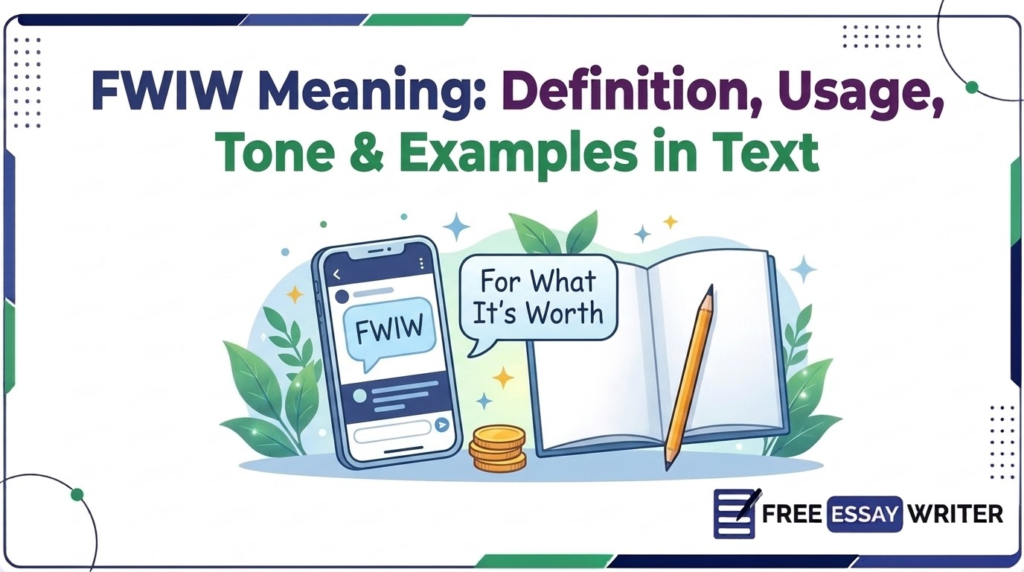
FWIW Meaning: Definition, Usage, Tone & Examples in Text
Muhammad Bilal
Content Writer
Guide
November 25, 2026
21 min
A classmate answers a long group project debate with a short line starting with capitals. The message says “FWIW, the library closes at eight on Fridays,” and the debate quietly changes direction. Students who pause at those letters are usually searching for the FWIW meaning and the tone behind it.
This guide explains what FWIW stands for, how people use it, and when it sounds snarky. Fans of opinion acronyms can also compare it with the guide on imo meaning for a close relative. The sections below cover origin, examples, comparisons, writing tips for students, common mistakes, and polite replies.
By the end, readers will know when FWIW strengthens a message and when a fuller phrase works better. The guide also explains why the acronym rarely belongs in essays, reports, or formal applications.
Quick Answer: What Does FWIW Mean?
FWIW means “for what it’s worth,” and people use it to share an opinion or fact modestly. The acronym signals that the writer offers information without claiming it will settle the matter. Its tone usually stays humble and friendly, though context can make it sound slightly sarcastic.
FWIW Meaning at a Glance
The table below gives a fast summary of the acronym before the deeper sections begin.
Feature
Details
Full form
For what it’s worth
Type
Internet acronym and initialism
Pronunciation
Letter by letter: F W I W
Common places
Texts, forums, emails, social comments
Typical tone
Humble, casual, helpful
Formal alternative
“For context” or “As a point of reference”
The table shows that FWIW fits casual writing where a modest tone helps messages land.
What Does FWIW Stand For?
FWIW stands for “for what it’s worth,” a phrase that softens advice, opinions, or extra details. Each letter maps to one word, which makes the acronym simple to decode once someone sees the pattern. People attach it to suggestions, facts, personal experiences, and gentle disagreements in many settings.
The phrase admits that the information may or may not help the reader. That humility makes advice easier to accept, especially during debates or sensitive conversations. The writer offers a contribution without demanding agreement from anyone in the conversation.
How to Pronounce FWIW
Most people read FWIW letter by letter, saying each of the four letters aloud in order. In speech, many people simply say the full phrase “for what it’s worth” instead. Nobody tends to pronounce the letters as a single word because the cluster sounds awkward.
Where Did FWIW Come From?
The phrase “for what it’s worth” existed in spoken English long before internet slang appeared. Speakers used it to offer modest opinions in letters, conversations, and public speeches. A famous 1967 Buffalo Springfield song even used the phrase as its title.
The short acronym grew popular in early online communities such as Usenet groups, forums, and chat rooms. Typing four letters saved time during long technical discussions and friendly debates. Email lists and message boards then carried the acronym into everyday online writing.
Why the Acronym Stayed Popular
FWIW solves a social problem by letting writers share opinions without sounding bossy or arrogant. Online debates often turn heated, and a modest opener lowers the temperature quickly. That usefulness kept the acronym alive across decades of changing platforms and apps.
Major dictionaries such as Merriam Webster now list FWIW among recognized abbreviations for everyday writing. Its long survival shows how well the phrase fits the way people share ideas online. Teachers, parents, and managers now recognize it instantly, which makes it safe for most casual messages. Few internet acronyms from that early era remain this common across so many age groups.
In simple words, FWIW says “here is my two cents, take it or leave it.”
How People Use FWIW in Text Messages
In private texts, FWIW usually introduces a helpful fact, a personal opinion, or a gentle suggestion. Friends use it when they want to help without sounding like they are giving orders. The acronym keeps advice casual and leaves the final choice with the other person.
FWIW also appears when someone adds information that might change a decision in the chat. A friend might mention store hours, prices, or past experiences with a restaurant. The modest framing keeps the conversation friendly whenever opinions in the group differ.
Text Message Examples
Here are realistic examples that show the acronym inside everyday texts:
“FWIW, the new pizza place downtown gave me a coupon for half off.”
“FWIW, I thought your presentation went great, so please stop worrying about it tonight.”
“FWIW, the movie runs almost three hours, so we should grab dinner first.”
Each example uses FWIW to introduce helpful information without pressure or bossy wording.
How FWIW Works on Forums and Social Media
Forums, Reddit threads, and comment sections use FWIW heavily during advice discussions and product debates. A commenter might share personal results with a laptop, recipe, or study method. The acronym signals that the comment reflects one experience, not a universal rule.
On platforms like X, Threads, LinkedIn, and Facebook, FWIW often introduces a counterpoint or extra context. It softens disagreement so the thread stays respectful instead of turning into an argument. Forum moderators often appreciate comments that use modest openers like FWIW during heated threads.
Social Media Examples
These sample comments show how people typically use the acronym in public threads:
“FWIW, the older model still gets security updates, so there is no rush to upgrade.”
“FWIW, my professor accepted late work with a doctor’s note last semester.”
“FWIW, I tried this recipe with less sugar, and it still tasted great.”
Public comments usually pair FWIW with personal experience or a verifiable fact.
FWIW in Emails and Workplace Chats
Workplace emails and chat tools use FWIW to add context without overriding a colleague’s plan. A team member might share data from a past project that relates to the current decision. The acronym signals respect for the other person’s authority over the final choice.
Senior colleagues sometimes use FWIW to offer advice without sounding like they are giving direct orders. That softer tone encourages open discussion and keeps junior team members comfortable. Formal client emails, though, usually spell out the full phrase or use a different opener.
Workplace Examples
Professional settings call for clear and specific phrasing, and these examples show balanced use:
“FWIW, the vendor offered a discount last year when we paid annually.”
“FWIW, the client mentioned budget concerns during Tuesday’s call, so pricing may need review.”
“FWIW, the shared template already includes the new logo and updated footer text.”
Each example gives a concrete detail right after the acronym, which keeps the message useful.
Is FWIW Polite or Sarcastic?
FWIW usually reads as polite because it frames the message as a modest contribution. The writer accepts that the reader may ignore the information, which sounds respectful. Most people receive FWIW messages as friendly input from someone trying to help.
Context and tone markers can flip that reading quickly during tense conversations. “FWIW, I did warn everyone about this” can sound like an “I told you so” moment. Adding blame words or heavy punctuation pushes the acronym toward sarcasm quickly.
Signals That Change the Tone
The table below shows how small details shift FWIW from humble to pointed.
Signal
Humble Reading
Sarcastic Reading
Content
New fact or helpful tip
Reminder of a past warning
Timing
Before a decision
After something went wrong
Added words
“Only my experience”
“As I said before”
Punctuation
Comma or colon
Ellipsis or repeated exclamation marks
Writers who watch these signals keep FWIW helpful instead of passive aggressive.
FWIW vs IMO and IMHO
IMO means “in my opinion,” while IMHO adds the word humble to that phrase. Both acronyms introduce personal views, while FWIW can introduce either opinions or facts. FWIW also carries a stronger sense of modesty about the value of the contribution.
Feature
FWIW
IMO
IMHO
Full form
For what it’s worth
In my opinion
In my humble opinion
Introduces
Opinions or facts
Opinions
Opinions
Modesty level
High
Neutral
High, sometimes ironic
Example
“FWIW, it closes at eight.”
“IMO, the sequel was better.”
“IMHO, tabs beat spaces.”
The main difference is that FWIW can share plain facts, while IMO and IMHO only frame opinions.
FWIW vs FYI
FYI means “for your information,” and it shares facts the reader should probably know. FWIW shares information more modestly, leaving room for the reader to decide its value. FYI often sounds more direct and slightly more official in workplace messages and notices.
Feature
FWIW
FYI
Full form
For what it’s worth
For your information
Tone
Humble and optional
Direct and informative
Typical use
Advice and extra context
Notices and updates
Workplace feel
Casual input
Standard notice
Choosing between them depends on whether the writer wants to inform directly or suggest gently.
FWIW vs TL;DR and BTW
TL;DR introduces a short summary of longer text, which saves readers time in long threads. Students can learn more about that acronym in the guide on tldr meaning for summary writing. BTW means “by the way” and adds a side topic to an ongoing conversation.
Acronym
Full Form
Main Job
FWIW
For what it’s worth
Offer modest input
TL;DR
Too long; didn’t read
Summarize longer content
BTW
By the way
Add a side topic
ICYMI
In case you missed it
Resurface earlier information
These acronyms often appear together in online threads, so knowing each job keeps messages clear.
FWIW in Group Projects and Class Chats
Group projects create many small decisions about deadlines, roles, sources, and presentation styles. FWIW helps students share suggestions without stepping on a team leader’s role or decisions. A comment like “FWIW, the rubric gives extra points for visuals” can guide the plan gently.
Class chats also use FWIW when students share tips about professors, exams, or campus resources. These modest messages help newer students without making anyone feel lectured or embarrassed. Clear, specific FWIW tips often become the most saved messages in busy class chats.
Keeping Group Input Fair
Teams work best when every member feels free to share ideas without fear of judgment. FWIW lowers the pressure, especially for quieter students who hesitate to challenge louder voices. Leaders can encourage that habit by thanking members whenever they share helpful input.
A short weekly check in message also gives everyone a chance to add useful context early. Early input prevents last minute surprises and keeps the final grade safer for the whole team.
Should Students Use FWIW in Essays?
Students should avoid FWIW in essays, research papers, lab reports, and formal applications. Academic writing expects complete words and a confident, evidence based voice from every student. Internet acronyms make an essay look rushed and informal to teachers and admissions readers.
The idea behind FWIW can still appear in academic writing through careful phrasing. Writers can introduce a limitation, a counterpoint, or a personal observation with formal language. That method keeps the modest tone while meeting the academic expectations of most teachers.
Formal Alternatives for Academic Writing
The table below lists academic phrases that carry a similar modest meaning.
Formal Phrase
Best Use
As a point of reference
Adding comparison data
It may be worth considering
Introducing an alternative view
One relevant detail is
Adding extra context
From a limited sample
Sharing small scale findings
A further consideration is
Raising a counterpoint
These phrases keep academic writing modest and precise without relying on internet slang.
FWIW Synonyms for Casual Writing
Writers sometimes want variety, especially when FWIW already appeared earlier in the same thread. The table below lists casual alternatives and the moods each one creates.
Alternative
Mood
Example Setting
My two cents
Friendly and modest
Group chats and forums
Not sure if this helps
Humble and careful
Advice threads
One thing worth knowing
Helpful and direct
Team chats
Quick thought
Light and casual
Brainstorming sessions
From my experience
Personal and grounded
Product reviews
Rotating these phrases keeps writing fresh while preserving the modest tone that FWIW provides. Readers notice repeated acronyms quickly, so variety helps longer conversations feel natural. Each option still signals that the writer offers input instead of orders.
Phrases That Often Pair With FWIW
Writers often combine FWIW with softening phrases that make the message even gentler for readers. Common pairings include “FWIW, only my experience” and “FWIW, no pressure either way.” These softer additions work well when the topic feels personal or emotionally sensitive.
Some writers also close the message with a short question asking whether the tip helps. That closing invites a reply and shows genuine interest in the other person’s view. The combination keeps discussions warm, open, and respectful throughout the whole exchange.
How to Use FWIW Correctly
Using FWIW well takes only a few habits, and the steps below cover them clearly.
Step 1: Decide Whether the Input Helps
FWIW works best when the information could change a decision or add useful context. Random facts that do not relate to the discussion can confuse readers. Ask whether the detail truly helps the group before typing the acronym at all.
Step 2: Place FWIW at the Start
Most writers place FWIW at the beginning of a message, followed by a comma. This position tells readers immediately that a modest contribution follows in the message. Mid sentence placement can work, but it often reads less smoothly in short texts.
Step 3: Share a Specific Detail
Follow the acronym with a clear fact, experience, or suggestion that readers can evaluate quickly. Vague comments after FWIW waste the reader’s time and weaken the message. Specific details make the modest tone feel helpful instead of empty or vague.
Step 4: Check the Timing
FWIW sounds helpful before a decision and can sound smug after something goes wrong. Share useful input early whenever possible to avoid “I told you so” moments. If a problem already happened, focus on solutions instead of past warnings.
Step 5: Match the Audience
Friends and online communities understand FWIW instantly, while some clients and older relatives may not. Spell out the full phrase in formal emails, cover letters, and school assignments. A quick audience check keeps the message clear and professional for every reader.
How to Reply to a FWIW Message
Most FWIW messages need only a short thank you or a quick reaction. A reply shows the writer that their input reached the reader and mattered. The examples below cover friendly, professional, and playful situations that come up daily.
Friendly Replies
Casual replies keep group chats warm and moving, and these options fit friends well:
“Thanks, that coupon tip might save our whole Friday night plan and budget.”
“Good to know, I had no idea the movie ran that long.”
Professional Replies
Work replies should confirm the input and mention any next step clearly:
“Thanks for the context, I will check the annual discount before renewing the contract.”
“Appreciate the note, I will add pricing to the agenda for Thursday’s review.”
Playful Replies
Close friends often trade jokes, and light replies fit those chats nicely:
“Your two cents earned serious interest today, thanks for the brilliant tip.”
“FWIW received and filed under surprisingly useful advice from my favorite overthinker.”
Real World Example: A Study Group Uses FWIW
A study group of six students planned sessions for a difficult statistics final over three weeks. One member noted that the professor’s practice exams closely matched the real exam format. The group shifted focus from textbook problems to timed practice exams the next day.
That modest message changed the study plan without sparking an argument about methods. Nobody felt corrected, because the input arrived as a helpful option instead of a demand. The leader thanked the member publicly, which encouraged others to share tips later. Several members later said the practice exams helped them manage time during the real test. The example shows how FWIW can share valuable information while keeping group harmony.
FWIW in Reviews and Recommendations
Product reviews and recommendation threads use FWIW to share personal experience without claiming universal truth. A reviewer might write that a backpack survived two years of daily campus use. The acronym reminds readers that one person’s experience may differ from theirs.
Shoppers often trust modest reviews more than loud praise, since humble wording feels more honest. FWIW helps reviewers sound balanced, especially when they mention both strengths and weaknesses. That balance makes the review more useful for readers comparing several products.
Writing Balanced FWIW Reviews
Strong reviews pair FWIW with specific details such as time used, price paid, and real conditions. A comment like “FWIW, the battery lasted nine hours during exam week” gives readers clear evidence. Vague praise without details rarely helps anyone make a smarter buying decision.
FWIW in Online Debates
Online debates about sports, politics, movies, and technology often turn tense within a few replies. FWIW gives writers a way to add a fact without escalating the argument further. A modest opener lowers defenses and makes opposing readers more willing to consider new information.
Writers should still check facts before sharing them, since modest wording does not make claims accurate. Linking to a trusted source or naming where the fact came from builds credibility quickly. Respectful debates usually end with more learning and fewer blocked accounts on every side.
Common Mistakes When Using FWIW
1. Using FWIW in Formal Writing
Essays, cover letters, and official reports expect full words instead of internet acronyms. FWIW in these documents can make the writer look careless or overly casual. Use formal alternatives such as “as a point of reference” instead in those documents.
2. Using FWIW to Say “I Told You So”
Messages like “FWIW, I warned everyone” sound smug after a problem appears. Readers notice the blame hidden behind the modest acronym almost immediately in these cases. Focus on solutions instead when sharing input after something in the project goes wrong.
3. Adding FWIW to Every Message
Overusing FWIW makes every comment sound unsure, which weakens the writer’s credibility over time. Save it for moments when modesty truly helps the message land with readers. Plain statements work better for routine updates, confirmations, and simple scheduling messages.
4. Following FWIW With Vague Comments
A message like “FWIW, maybe think about it” gives readers nothing useful to evaluate. The acronym promises a contribution, so the message should deliver one clearly. Share a specific fact, number, or personal experience right after FWIW every time.
5. Confusing FWIW With FYI
FYI shares information directly, while FWIW offers it modestly as optional input. Mixing them up can make important notices sound optional or casual advice sound official. Choose the acronym that matches how strongly the writer stands behind the information.
Tips for Using FWIW Naturally
These tips keep FWIW helpful, friendly, and clear in texts, threads, and emails:
Place FWIW at the start of a message so readers know a modest contribution follows.
Follow the acronym with one specific fact, number, or personal experience that adds value.
Share FWIW input before decisions happen so it never sounds like hidden blame later.
Spell out “for what it’s worth” in formal emails, cover letters, and client messages.
Avoid FWIW in essays and reports, and use academic phrases with similar modest meaning.
Limit FWIW to moments when modesty helps, since overuse makes the writer sound unsure.
Test Your Knowledge of FWIW
Short practice questions help readers check whether the meaning and tone of FWIW truly stuck. Try answering each question first, then read the explanation that follows it.
Question 1: Which Message Uses FWIW Best?
Picture one message sharing store hours before a trip and another pointing out an old warning. The first message uses FWIW best because it offers helpful information before a decision. The second message risks sounding smug, even if the writer feels calm.
Question 2: Where Does FWIW Not Belong?
FWIW does not belong in essays, scholarship applications, lab reports, or formal cover letters. These documents expect complete words and a formal academic or professional register. Phrases like “as a point of reference” carry the same modest idea formally.
Question 3: How Does FWIW Differ From FYI?
FWIW offers information modestly and leaves its value for the reader to judge freely. FYI shares information more directly, often as a notice the reader should know about. Choosing the right acronym depends on how strongly the writer stands behind the information.
Next Step: Strengthen Everyday Writing
Knowing acronyms like FWIW helps students and professionals read online messages quickly and accurately. The next step is learning when casual language helps and when formal language works better. That skill matters for emails to teachers, internship applications, and workplace reports.
A good habit is reading each message aloud before sending it to an important reader. Phrases that sound too casual usually stand out immediately when spoken aloud. Free writing tools can also help check tone, grammar, and clarity before submission.
FWIW Writing Checklist
Use this checklist before sending any message that starts with FWIW:
Confirm the information relates directly to the current discussion or decision being made.
Place FWIW at the start of the message followed by a comma for clarity.
Add a specific detail, number, or experience directly after the acronym in every case.
Check that the timing comes before the decision so the message never sounds smug.
Make sure the audience understands internet acronyms before skipping the full phrase.
Remove FWIW from essays, reports, and applications and replace it with formal phrasing.
Read the message once more to confirm the tone sounds humble and never sarcastic.
Frequently Asked Questions
What does FWIW mean in text?
FWIW means “for what it’s worth” in text messages and online chats. People use it to share opinions, facts, or advice modestly without pressuring the reader. The tone usually sounds humble and friendly between classmates, coworkers, and close friends.
Is FWIW rude?
FWIW is not rude in most situations because it frames input as a modest contribution. It can sound sarcastic after a problem happens, especially when it hints at an earlier warning. Careful timing keeps the FWIW meaning polite and helpful in group conversations.
How is FWIW pronounced?
Most people say FWIW letter by letter, reading each of the four letters aloud. Many speakers prefer the full phrase “for what it’s worth” during conversation. Almost nobody pronounces the acronym as one blended word during normal speech.
Can FWIW be used in professional emails?
FWIW works in casual internal emails and team chats between colleagues who know the acronym. Formal client emails, cover letters, and official reports should use the full phrase or formal alternatives. Matching the FWIW meaning to the audience keeps workplace communication clear and professional.
What is the difference between FWIW and IMO?
FWIW can introduce opinions or facts with a modest tone toward the reader. IMO only introduces personal opinions and sounds more neutral than humble to most readers. Both acronyms keep online discussions respectful when writers use them carefully and sparingly.
Should students use FWIW in essays?
Students should not use FWIW in essays, research papers, or academic assignments. Academic writing expects complete words and formal phrasing throughout the entire document. Phrases like “as a point of reference” carry a similar modest meaning.
Where did FWIW come from?
The phrase “for what it’s worth” existed in spoken and written English long before the internet. The acronym grew popular in early online communities such as Usenet groups and forums. Major dictionaries now recognize FWIW as a standard abbreviation in everyday English.
What is a good reply to a FWIW message?
A short thank you or acknowledgment works well for most FWIW messages in chats and emails. Professional replies should confirm the next step or decision related to the input. Playful replies suit close friends, roommates, and casual group conversations better than work threads.
Is FWIW the same as “my two cents”?
FWIW and “my two cents” carry close meanings in everyday conversation and online threads. Both phrases offer a modest opinion that the reader can accept or ignore freely. FWIW can also introduce facts, while “my two cents” usually introduces opinions.
Should FWIW be written in capital letters?
Capital letters are the most common style for FWIW in emails, forums, and social posts. Lowercase “fwiw” appears often in casual texts and carries the same meaning. Either style works fine, though capitals improve readability in longer messages and threads.
Key Takeaways
FWIW means “for what it’s worth” and introduces opinions, facts, or advice with a modest tone.
The acronym usually sounds humble because it leaves the final decision fully with the reader.
People say FWIW letter by letter or speak the full phrase during everyday conversations.
The phrase existed long before the internet and spread online through early forums and chat rooms.
FWIW can introduce plain facts, while IMO and IMHO only introduce personal opinions and views.
FYI shares information directly, while FWIW offers information as optional input for the reader.
Timing matters because FWIW after a problem can sound like a hidden “I told you so.”
Students should avoid FWIW in essays and use formal phrases with similar modest meaning instead.
Every FWIW message should include a specific fact, number, or experience that adds real value.
Overusing FWIW makes a writer sound unsure, so save it for moments when modesty helps.
Capital and lowercase versions share the same meaning, though capitals read better in long messages.
Final Thoughts
FWIW remains popular because it helps people share useful ideas without sounding bossy or arrogant. Four short letters soften advice, add context, and keep online debates respectful. Used at the right moment, the acronym makes input feel generous instead of pushy.
Keep messages specific, share input before decisions, and switch to formal phrasing for academic work. Those habits keep the FWIW meaning clear in texts, threads, and workplace chats. Explore more writing guides and free tools on Free Essay Writer for stronger everyday writing.



 Muhammad Bilal
Read more