A new student walks into class, and some classmates decide what she is like before she says a single word. That quick judgment, formed without facts, sits at the heart of the prejudice meaning. The word appears in essays, history lessons, law, and daily conversation, so students meet it often.
This guide explains what prejudice means, where the word came from, and how writers use it correctly. Students who study value words can also read our guide on integrity meaning, which covers another common essay term. Both words help writers discuss character, fairness, and human behavior with precision.
The sections below cover definitions, origins, examples, types, synonyms, related terms, legal uses, common mistakes, and a writing checklist. Each part uses clear language so students, teachers, and general readers can follow along.
Quick Answer: What Is the Prejudice Meaning?
Prejudice means a judgment or opinion formed before knowing the facts, usually an unfair negative attitude toward a group or person. It often rests on stereotypes about race, religion, gender, age, or background. In law, the word also means harm to someone’s rights, so context decides which sense applies.
What Does Prejudice Mean at a Glance?
Prejudice is a preconceived opinion that someone forms without enough evidence or personal experience. Most modern uses describe negative attitudes toward people based on group membership. The table below gathers the core facts about the word in one place.
Item
Detail
Word
Prejudice
Part of speech
Noun and verb
Core meaning
Judgment formed before the facts
Latin root
Praejudicium, meaning prior judgment
Common context
Social attitudes, law, literature
Adjective form
Prejudiced, prejudicial
Opposite ideas
Fairness, open mindedness, impartiality
This snapshot shows that prejudice covers both social attitudes and legal harm, which explains its wide use in writing.
In simple words, prejudice means judging people before knowing them, and usually judging them unfairly.
Where Does the Word Prejudice Come From?
The word prejudice comes from the Latin “praejudicium,” which joins “prae,” meaning before, with “judicium,” meaning judgment. Roman writers used the term for a preliminary judgment or a decision based on an earlier case. The idea of judging ahead of time sits right inside the word’s structure.
English borrowed the word through Old French during the Middle Ages, around the thirteenth century. Early English uses often carried a legal sense of injury or damage to someone’s rights. Over time, the social meaning of an unfair preconceived opinion became the most common use.
Today, dictionaries list both senses, but most readers think first of social attitudes. Essays about history, civil rights, and literature use the social sense far more often. Legal documents still keep the older sense in phrases such as “without prejudice.”
How Did the Meaning Change Over Time?
Early meanings focused on harm, loss, or a judgment that affected a person’s legal standing. Later writers applied the word to opinions formed before examining the evidence. By the twentieth century, social scientists used prejudice mainly for negative attitudes toward groups.
How Do Psychologists Define Prejudice?
Psychologists usually define prejudice as a negative attitude toward people based only on group membership. Gordon Allport’s 1954 book “The Nature of Prejudice” guided how researchers study the topic today. Allport described prejudice as an antipathy built on a faulty and rigid generalization.
Researchers often split prejudice into three parts: thoughts, emotions, and actions, which together form the full attitude. Stereotypes form the thinking part, while dislike or fear forms the emotional part. Discrimination appears when those thoughts and emotions turn into unfair actions against real people.
Component
What it involves
Example
Cognitive
Beliefs and stereotypes
“People from that town are lazy.”
Affective
Emotions such as dislike or fear
Discomfort around a certain group
Behavioral
Actions toward the group
Refusing to hire someone from that group
This breakdown helps students separate attitudes from actions when they write about social issues.
What Are the Key Characteristics of Prejudice?
Prejudice shares several features across cultures, time periods, and everyday social situations. These key characteristics help readers recognize it in texts and real life:
Prejudice forms before a person gathers enough facts or personal experience about others.
It usually targets people because of group membership, not because of individual actions or choices.
The attitude resists change, even when someone meets clear evidence that contradicts it.
It often relies on stereotypes, which are oversimplified beliefs about an entire group of people.
Prejudice can stay hidden in thoughts, or it can appear openly through words and actions.
People can learn prejudice from family, media, peers, and wider culture during childhood.
These features explain why prejudice spreads quietly and why changing it takes deliberate effort.
Examples of Prejudice in Sentences
Example sentences show how careful writers use the word in many different settings. The table below covers social, legal, and literary uses that students meet often.
Context
Example sentence
Social
“The report showed clear prejudice against older job applicants.”
School
“The teacher asked students to examine their own prejudice before the debate.”
History
“Many civil rights leaders spent decades fighting racial prejudice.”
Legal
“The court dismissed the case with prejudice, so the plaintiff cannot refile.”
Verb form
“Pretrial publicity may prejudice the jury against the defendant.”
Literature
“Austen’s novel explores how pride and prejudice cloud the characters’ judgment.”
These examples show that the word works as both a noun and a verb, with meanings that change by context.
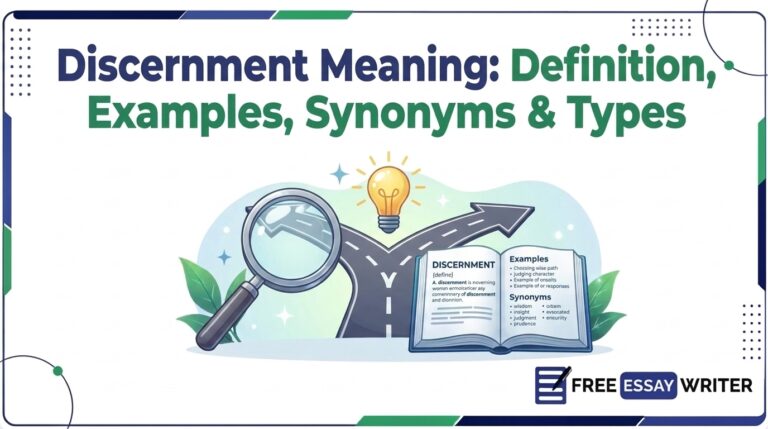
Students who want to sharpen their judgment vocabulary can also read our guide on discernment meaning, which describes the opposite habit of judging wisely. Discernment weighs evidence carefully, while prejudice skips the evidence entirely and jumps ahead.
What Are the Main Types of Prejudice?
Prejudice can target almost any group, but researchers and writers discuss several common types. The table below lists the types students meet most often in essays and textbooks.
Type
Target
Common related term
Racial
People of a certain race or ethnicity
Racism
Gender
People because of their sex
Sexism
Age
Older or younger people
Ageism
Religious
Followers of a certain faith
Religious intolerance
Class
People with less money or status
Classism
Disability
People with physical or mental disabilities
Ableism
Nationality
People from certain countries
Xenophobia
Appearance
People judged by weight or looks
Lookism
This list shows that prejudice takes many forms, yet each form follows the same pattern of unfair prejudgment.
Racial and Ethnic Prejudice
Racial prejudice judges people by skin color, ancestry, or ethnic background instead of personal qualities. History offers many examples, including segregation laws and unequal treatment in housing and jobs. Essays on civil rights movements often focus on this type of unfair judgment.
Age Prejudice
Age prejudice assumes older or younger people lack skills, energy, or good judgment because of age alone. Employers sometimes overlook older applicants, while some adults dismiss teenagers’ opinions without listening. Both patterns reflect the same unfair shortcut in thinking about other people.
Religious Prejudice
Religious prejudice targets people because of their faith, worship practices, or religious clothing. It can appear as jokes, exclusion, or unequal treatment at school and work. Many countries protect religious freedom in law to limit this type of harm.
Prejudice vs Discrimination vs Stereotype vs Bias
Students often mix up these four terms because they appear together in essays and textbooks. Each word describes a different part of unfair treatment toward people or groups. The table below separates them clearly for quick reference during essay writing.
Term
Meaning
Type
Prejudice
Unfair attitude formed before the facts
Attitude
Stereotype
Oversimplified belief about a group
Belief
Discrimination
Unfair treatment based on group membership
Action
Bias
General tendency to favor or disfavor
Leaning
The key takeaway is that prejudice describes an inner attitude, while discrimination describes an action.
Do not use prejudice and discrimination as exact synonyms in academic writing. A person can hold prejudice without acting on it, and discrimination can happen through unfair rules without strong personal hostility. Clear academic writing keeps the two related ideas separate in every paragraph.
What Is Implicit Bias?
Implicit bias describes attitudes that people hold without any conscious awareness of them. Researchers study it with tools such as the Implicit Association Test developed at Harvard and other universities. Implicit bias differs from open prejudice because the person may sincerely reject the attitude.
Synonyms and Antonyms of Prejudice
Writers use synonyms to avoid repeating the same word, but each synonym carries a slightly different shade. The table below lists the most common options along with their opposites.
Synonyms
Antonyms
Bias
Fairness
Bigotry
Impartiality
Intolerance
Tolerance
Partiality
Open mindedness
Preconception
Objectivity
Narrow mindedness
Acceptance
This table helps writers choose words that match the exact strength and tone they need.
Bigotry sounds stronger and more hostile than prejudice, so writers should use it carefully. Bias sounds milder and fits discussions of research, news coverage, or decision making. Preconception sounds neutral and can describe any early opinion, including fair ones.
What Does Prejudice Mean in Law?
In law, prejudice usually means harm or disadvantage to a person’s legal rights. Courts and lawyers use the word in several fixed phrases that students may meet in reading. The table below explains the most common ones in plain, everyday language.
Legal phrase
Meaning
Without prejudice
Statements cannot be used later as an admission
Dismissed with prejudice
The case ends permanently and cannot be refiled
Dismissed without prejudice
The case ends for now but can be refiled
Prejudicial evidence
Evidence that may unfairly sway a jury
These phrases show that the legal sense focuses on harm to rights, not on social attitudes.
In legal writing, “with prejudice” means a final decision, not an unfair opinion held by the judge. Students who quote court cases should explain this sense to avoid confusing readers. The difference matters a great deal in history, government, and law essays.
Prejudice in Literature
Literature often explores prejudice because the topic reveals character, conflict, and growth. Jane Austen’s 1813 novel “Pride and Prejudice” made the word famous in English literature. Its main characters judge each other too quickly and must correct their first impressions.
Harper Lee’s “To Kill a Mockingbird” examines racial prejudice in a small Southern town during the 1930s. Many schools assign it because it shows how prejudice affects a trial and a community. Students often write essays comparing how different characters respond to unfair judgment.
Other classic works, such as “Of Mice and Men” and “The Merchant of Venice,” also present characters facing prejudice. Writers use these stories to show how fear and ignorance shape behavior. Literary essays usually ask students to explain how the author presents and challenges those attitudes.
How to Use Prejudice Correctly in Writing: Step by Step
Using the word correctly makes essays sharper, clearer, and more precise for readers. The steps below help students choose the right sense and form every time.
Step 1: Decide Which Sense Applies
Check whether the sentence discusses social attitudes or legal harm to someone’s rights. Social essays usually need the attitude sense, while law essays may need the harm sense. Mixing the two senses in one essay confuses readers and weakens the main argument quickly.
Step 2: Choose the Right Word Form
Use “prejudice” as a noun for the attitude and as a verb for causing harm. Use “prejudiced” as the adjective that describes a person who holds unfair attitudes. Use “prejudicial” to describe something that causes harm, such as misleading evidence in court.
Step 3: Name the Target Group
Specify who faces the prejudice, such as older workers, immigrants, or religious minorities. Vague phrases weaken arguments and make the supporting evidence harder to follow. Precise targets make each claim easier to support with reliable sources and data.
Step 4: Support Claims With Evidence
Back statements about prejudice with data, quotes, or historical examples from reliable sources. Unsupported claims about whole groups can sound like prejudice themselves to careful readers. Strong evidence keeps the argument fair, balanced, and convincing for every reader.
Step 5: Separate Attitude From Action
Distinguish prejudice, which is an attitude, from discrimination, which is an action. This separation shows clear thinking and avoids a common grading deduction. Teachers often reward this kind of precise vocabulary with higher essay marks.
Common Mistakes When Using the Word Prejudice
Students make several predictable errors with this word in essays and timed exams. The mistakes below appear most often in high school and college student writing.
1. Confusing Prejudice With Discrimination
Many essays treat the two words as identical, which weakens the overall analysis. Prejudice describes an inner attitude, while discrimination describes unfair actions or rules.
2. Writing “Prejudice” Instead of “Prejudiced”
Some students write “he is prejudice” when they mean “he is prejudiced.” The adjective form needs the “d” at the end in that sentence.
3. Misspelling the Word
Common misspellings include “predjudice,” “prejudise,” and “prejidice.” The correct spelling keeps one “j” and ends with “dice.”
4. Ignoring the Legal Sense
Some readers misread “dismissed with prejudice” as a sign of a biased judge. In law, the phrase simply means the case cannot be filed again.
5. Using the Word Too Broadly
Calling every disagreement prejudice weakens both the term and the larger argument. The word fits judgments made without facts, especially judgments about whole groups.
6. Making Unsupported Claims
Accusing a person or group of prejudice without evidence can damage an essay’s credibility. Strong writing supports every single claim with clear sources and specific, relevant examples.
Tips for Writing About Prejudice in Essays
Essays about prejudice require care, balance, and strong evidence from trusted sources. These tips help students write thoughtful, fair, and well supported arguments on the topic:
Define prejudice clearly in the introduction so readers know which sense the essay uses.
Use specific historical or current examples instead of broad statements about whole groups.
Quote reliable sources such as textbooks, academic studies, and respected historians when possible.
Separate prejudice, stereotypes, and discrimination so each paragraph discusses one clear idea.
Include solutions or responses, such as education, contact, and fair laws, near the conclusion.
Proofread for the correct spelling and word form before submitting any final draft.
These tips turn a sensitive topic into a clear, well supported, and respectful essay.
Prejudice in History
History shows how prejudice can move from private attitudes into laws, institutions, and violence. Many of the worst injustices in history began with ordinary people accepting unfair ideas about others. Students who study these events learn how quickly prejudice can grow when nobody challenges it.
In the United States, segregation laws in the South separated people by race in schools, buses, and restaurants for decades. The civil rights movement of the 1950s and 1960s challenged those laws through protests, court cases, and new legislation. The Civil Rights Act of 1964 banned many forms of discrimination in jobs and public places.
In Europe, prejudice against Jewish people built up over centuries before reaching its most deadly form during the Holocaust. Historians study that period to show how propaganda spread stereotypes and turned neighbors against neighbors. These lessons remain central in history classes around the world.
South Africa’s apartheid system offers another example of prejudice written directly into national law. The system divided people by race from 1948 until the early 1990s. Its end showed that organized resistance, international pressure, and new leadership can change unfair systems.
Historical example
Period
Form of prejudice
Segregation in the American South
Late 1800s to 1960s
Racial
The Holocaust
1933 to 1945
Religious and ethnic
Apartheid in South Africa
1948 to early 1990s
Racial
Barriers to women voting
Through the early 1900s
Gender
This table shows that prejudice often gained strength when it became part of official rules and institutions.
Prejudice in Everyday Life
Prejudice does not appear only in history books, because it also shows up in ordinary daily moments. A shopper might follow a certain customer around a store because of how that customer looks. A classmate might assume a student cannot do math well because of the student’s gender.
Online spaces can spread prejudice quickly through jokes, memes, and anonymous comments. Short posts often reduce whole groups to a single trait, which strengthens stereotypes over time. Readers who notice these patterns can choose not to share or repeat them.
Everyday prejudice also affects the people who face it, often in quiet but lasting ways. Repeated small slights can lower confidence, increase stress, and reduce trust in schools or workplaces. Researchers sometimes call these small slights microaggressions, a term that appears in many modern essays.
Prejudice Practice Questions for Students
Short practice questions help students check their grasp of the word before using it in essays. Try answering each one before reading the explanation below it.
Which Word Fits: Prejudiced or Prejudicial?
The sentence “The judge removed the prejudicial evidence” uses the correct word for harmful evidence. The adjective “prejudiced” would describe a person, not a piece of evidence.
Is Refusing to Rent to Someone Because of Religion Prejudice or Discrimination?
That action counts as discrimination, because it turns an unfair attitude into an unfair decision. The attitude behind the decision would count as religious prejudice.
What Does the “Pre” in Prejudice Tell Readers?
The prefix “pre” means before, so prejudice describes a judgment made before the facts arrive. This simple clue helps students remember the meaning during exams and essays.
How Can People Reduce Prejudice?
Researchers have studied ways to reduce prejudice for decades, and several methods show promise. Allport’s contact hypothesis suggests that positive contact between groups can lower negative attitudes. That contact works best when groups share equal status, common goals, and support from leaders.
Education also helps by replacing stereotypes with accurate knowledge about other people and cultures. Schools that teach history from many perspectives give students a wider view of human experience. Reading literature about different lives can build empathy and reduce snap judgments.
Personal habits matter too, because everyone forms quick impressions about others at times. Pausing before judging, asking questions, and seeking facts can interrupt prejudiced thinking. These small steps build fairer habits over months and years.
Real World Example: Prejudice at a Job Interview
Consider a fictional hiring manager reviewing two equally qualified candidates for a sales position. One candidate is fifty eight years old, and the other is twenty six years old. The manager assumes the older candidate will struggle with new software, without asking any questions.
That assumption reflects age prejudice, because it judges the candidate by age instead of skills. If the manager rejects the older candidate for that reason, the prejudice becomes age discrimination. Many countries treat that kind of decision as unlawful age discrimination in hiring.
A fairer process would test both candidates on the same software tasks and compare results. Structured interviews and clear scoring guides reduce the space for snap judgments. This example shows how prejudice turns into unfair action without careful checks.
Prejudice Writing Checklist
Use this checklist before submitting any essay or report that discusses prejudice:
Confirm that the essay uses the social sense or legal sense consistently throughout.
Check that every use of “prejudiced” and “prejudicial” matches the correct word form.
Separate prejudice, stereotypes, bias, and discrimination with clear definitions and examples.
Support each claim about a group with reliable evidence from respected sources.
Avoid broad statements that could themselves sound unfair to any group of people.
Spell the word correctly with one “j” and the ending “dice” every time.
Following this checklist produces essays that sound accurate, balanced, and well researched.
Frequently Asked Questions
What is the simple prejudice meaning?
The simple prejudice meaning is judging someone before knowing the facts about them. It usually describes an unfair negative attitude toward a person or group. The judgment often rests on stereotypes instead of real experience with people.
What is an example of prejudice?
An example of prejudice is assuming an older worker cannot learn new technology. Another example is distrusting someone only because of their religion or accent. Both cases judge people by group membership instead of their individual qualities.
What is the difference between prejudice and discrimination?
Prejudice is an unfair attitude, while discrimination is an unfair action based on that attitude. A person can hold prejudice privately without ever acting on it openly. Discrimination appears when prejudice shapes real decisions, treatment, or official rules.
Where does the word prejudice come from?
The word prejudice comes from the Latin “praejudicium,” which means a prior judgment. English borrowed it through Old French during the Middle Ages, around the thirteenth century. The original sense focused on legal harm before the social meaning became dominant.
What does “without prejudice” mean?
“Without prejudice” is a legal phrase that protects statements made during negotiations. Those statements cannot be used later as an admission of fault in court. The phrase has nothing to do with unfair personal attitudes or social bias.
What does dismissed with prejudice mean?
Dismissed with prejudice means a court has ended a legal case permanently. The person who filed the case cannot bring the same claim again. This legal prejudice meaning differs completely from the common social sense.
What are the main types of prejudice?
The main types of prejudice include racial, gender, age, religious, class, disability, and nationality prejudice. Each type targets people because of group membership, not because of personal actions. Researchers study all of them using similar surveys, experiments, and field studies.
Is prejudice the same as bias?
Prejudice and bias overlap a great deal, but they are not exactly the same. Bias describes a general leaning toward or against something, which can be mild or even neutral. Prejudice usually describes a stronger, unfair attitude toward people or groups.
What is the opposite of prejudice?
The opposite of prejudice includes words such as fairness, impartiality, tolerance, and open mindedness. These words describe judging people based on facts and their actual personal qualities. Writers choose among them based on the tone and context of each sentence.
How is prejudice spelled correctly?
The correct spelling is p r e j u d i c e, with one “j” and the ending “dice.” Common errors include “predjudice” and “prejudise.” Reading the word as “pre” plus “judice” helps writers remember the spelling.
Key Takeaways
Prejudice means a judgment formed before the facts, usually an unfair attitude toward people.
The word comes from the Latin “praejudicium,” which joins the ideas of before and judgment.
English borrowed the word through Old French, first with a legal sense of harm to rights.
Psychologists describe prejudice through thoughts, emotions, and actions, following Gordon Allport’s 1954 work.
Common types include racial, gender, age, religious, class, disability, and nationality prejudice.
Prejudice describes an attitude, while discrimination describes unfair actions or rules based on that attitude.
Legal phrases such as “with prejudice” refer to harm or finality, not to unfair personal opinions.
Jane Austen’s “Pride and Prejudice” made the word famous in English literature and classroom study.
Correct word forms include prejudice as a noun or verb, prejudiced, and prejudicial.
Positive contact, education, and careful habits can reduce prejudice over time in people and communities.
Strong essays define the term clearly and support every claim with reliable sources and examples.
History shows that prejudice gains strength when it becomes part of official laws and institutions.
Final Thoughts
The prejudice meaning centers on one idea: judging people before the facts arrive. Once students see the “pre” and “judge” inside the word, the meaning becomes easy to remember and apply. That clarity helps in history essays, literature analysis, law topics, and everyday discussions.
Strong writing about prejudice stays precise, fair, and grounded in evidence from reliable sources. Students who separate attitudes from actions and social senses from legal senses earn clearer arguments. Explore more word meanings, writing tips, and free tools on Free Essay Writer today.



 Muhammad Bilal
Read more