A teenager takes one bite of a fresh burger and declares that it is bussin. A parent at the same table nods politely, though the word sounds brand new to them. Moments like this happen in homes, classrooms, and comment sections every single day.
The bussin meaning is simple once you hear it explained: the word describes something extremely good, especially food. This guide covers the definition, origin, grammar, examples, similar slang, and the mistakes that make usage sound awkward. Readers who enjoyed our guide on imo meaning will find the same clear format here. By the end, you will know when the word fits a sentence and when plain English works better.
Quick Answer: What Does Bussin Mean?
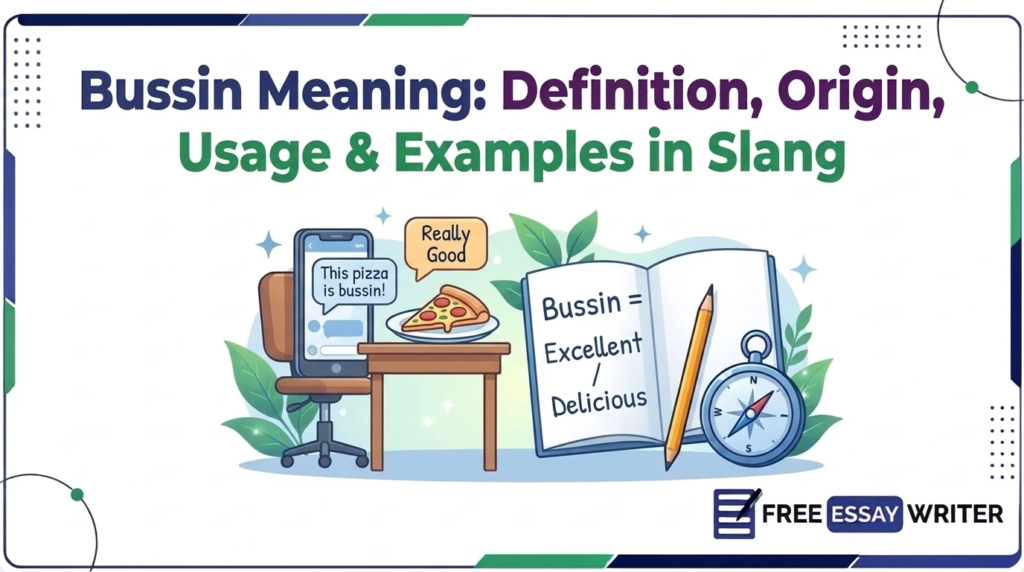
Bussin means extremely good or superb, and people use it most often to praise delicious food. Someone might say “This pizza is bussin” after tasting a great slice. The word also describes music, outfits, or events that impress the speaker in a big way. It works best in casual speech, texts, and social media, not formal writing.
Bussin Meaning at a Glance
Bussin is an informal adjective that signals strong approval, much like “amazing” or “delicious” in standard English. The table below summarizes the main facts about the word in a quick format:
| Feature |
Details |
| Part of speech |
Adjective, informal |
| Main meaning |
Extremely good, delicious |
| Common topic |
Food and drinks |
| Origin |
African American Vernacular English |
| Popular platform |
TikTok and other social apps |
| Common spellings |
Bussin, bussin’, bussing |
These details show that the word carries strong praise, casual tone, and a clear cultural history.
The Core Definition
In plain terms, bussin means something tastes, sounds, or looks so good that it deserves loud praise. Speakers usually use it right after a first impression, such as the first bite or first listen. The word carries more energy than “good,” which explains its popularity among younger speakers.
The Emotional Tone
Bussin sounds playful, excited, and friendly, so it fits relaxed conversations between friends and family. People rarely use it sarcastically, though tone of voice can always change any word’s meaning. In most cases, the speaker simply wants to share genuine excitement about something they enjoyed.
Where Did Bussin Come From?
Bussin did not appear out of nowhere on social media, though many people first heard it there. The word has a longer history in African American communities before it reached global audiences online.
Roots in African American Vernacular English
Linguists and slang dictionaries trace bussin to African American Vernacular English, often shortened to AAVE. Speakers in Black communities used the word for years to praise food and other good experiences. Many popular slang terms follow this same path from community speech into mainstream youth culture.
Possible Link to “Busting”
Some sources connect bussin to the phrase “busting,” as in food bursting with flavor in your mouth. The dropped “g” at the end reflects a common pronunciation pattern in casual American English speech. This link remains a likely theory, but no single documented moment marks the word’s first use.
Rise on TikTok and Social Media
Bussin spread widely around 2020 and 2021, when food reviewers and creators used it constantly on TikTok. Short videos showed people tasting snacks, then declaring the food “bussin” with dramatic reactions. The repeated phrase turned into a trend, and young viewers carried it into schools and group chats.
In simple words, bussin is a modern way of saying “this tastes amazing.”
How to Use Bussin in a Sentence
Bussin usually follows the verb “is” or “was,” which makes it easy to place in casual sentences. Speakers also repeat it for extra extra force, as in “bussin bussin,” to show even stronger approval.
Talking About Food
Food remains the most common topic, because the word started as praise for delicious meals and snacks. You might hear “Grandma’s rice is bussin” at a family dinner or holiday gathering. Food reviewers online also use it in captions to grab attention quickly.
Talking About Music, Outfits, and Events
Speakers now stretch bussin beyond food to describe songs, sneakers, parties, or game nights they loved. A friend might say “That new album is bussin” after listening to it twice in one afternoon. This wider use shows how slang grows once a large group starts using it.
Using “Bussin Bussin” for Extra Force
Repeating the word adds extra force, similar to saying “truly amazing” in standard English speech. Creators online made “bussin bussin” popular in reaction videos about fast food and street snacks. The doubled form sounds even more playful, so it suits light and funny moments.
The table below shows common sentence patterns with their plain English meanings:
| Example Sentence |
Plain English Meaning |
| This burger is bussin. |
This burger tastes amazing. |
| The party was bussin last night. |
The party was superb. |
| Your outfit is bussin today. |
Your outfit looks great today. |
| These tacos are bussin bussin. |
These tacos are extremely delicious. |
Each example keeps the same idea of strong praise, even when the topic changes from food.
Real Examples of Bussin in Texts and Social Media
Examples make slang easier to remember, because readers see how the word fits real conversations. The samples below reflect typical usage in texts, comment sections, and video captions.
Text Message Examples
A friend texts “Just tried that new chicken spot, it’s bussin,” which recommends the restaurant clearly. Another friend replies “Say less, I’m going tomorrow,” which shows quick trust in the tip. These short exchanges show how slang speeds up casual conversations between friends.
Social Media Captions
A food creator posts homemade noodles with the caption “Bussin, no cap” for viewers. The phrase “no cap” means “no lie,” so the caption promises that the praise is honest. Pairing slang terms this way stays common among younger creators and their audiences.
Comment Section Examples
Viewers often comment “That looks bussin” under recipe videos, cooking tutorials, and restaurant reviews. These comments express interest without requiring a long review or detailed explanation. Creators usually read such comments as strong approval from their growing audience online.
Is Bussin Grammatically Correct?
Bussin is not standard English, so grammar books and formal dictionaries treat it as slang. Many online dictionaries now list it, which shows that the word has reached wide recognition.
Part of Speech
Bussin works as an adjective in almost every sentence, describing a noun such as food or music. It usually appears after linking verbs like “is,” “was,” or “looks” in casual speech. Speakers rarely place it before nouns, so “a bussin meal” sounds less natural.
Spelling Variations
Writers spell the word as “bussin,” “bussin’,” or occasionally “bussing” in texts and captions. The apostrophe version shows the dropped “g,” but most young users skip the apostrophe entirely. Avoid “bussing” when you mean the slang, because that spelling also describes school bus transport.
Formal Writing Rules
Essays, reports, and professional emails should use standard words such as “superb” or “delicious” instead. Slang can confuse teachers, clients, or readers from different age groups and cultures. Students who want stronger vocabulary for essays can swap slang for precise descriptive words.
Bussin vs Similar Slang Words
Many slang terms share a positive tone with bussin, but each carries its own shade of meaning. Knowing these differences helps you pick the right word for each situation.
| Slang Word |
Meaning |
Typical Use |
| Bussin |
Extremely good, delicious |
Food, music, events |
| Fire |
Superb or impressive |
Music, outfits, ideas |
| Slaps |
Great and catchy |
Songs and playlists |
| Hits different |
Feels special or better |
Moments, memories, food |
| No cap |
No lie, honestly |
Adds truth to a claim |
Bussin leans toward taste and enjoyment, while fire and slaps lean toward style and sound.
Bussin vs Fire
Fire describes anything impressive, from a song to a new pair of shoes or a clever idea. Bussin focuses more on enjoyment and taste, though people now use it for other topics too. Many speakers use both words together, as in “This food is fire, actually bussin.”
Bussin vs Slaps
Slaps mainly describes music that sounds great, especially songs with strong beats or catchy hooks. Bussin rarely describes songs as often as slaps does, though some speakers still use it that way. Use slaps for playlists and bussin for meals if you want the most natural sound.
Bussin vs Hits Different
Hits different describes something that feels special, often because of timing, mood, or memories. Bussin describes quality, especially taste, without suggesting any deeper emotional reason behind the praise. A late night snack after a long day might “hit different,” while a great burger is simply bussin.
| Factor |
Bussin |
Hits Different |
| Main focus |
Quality and taste |
Feeling and context |
| Common topic |
Food |
Moments, songs, food |
| Tone |
Excited praise |
Thoughtful appreciation |
Pick bussin for direct praise and hits different when the setting makes something feel unusually good.
Bussin vs Delicious
Delicious is the standard English word that dictionaries, teachers, and food critics accept in every setting. Bussin carries the same core idea but adds energy, humor, and a youthful tone to the praise. Delicious fits essays and menus, while bussin fits texts, videos, and casual talk with friends.
| Factor |
Bussin |
Delicious |
| Register |
Informal slang |
Standard English |
| Best setting |
Texts and social posts |
Essays and reviews |
| Audience |
Friends and peers |
Any reader |
| Topics |
Food and other things |
Mostly food |
Both words praise food, so the setting and audience decide which one sounds right.
Bussin Meaning for Parents and Teachers
Parents and teachers often hear new slang before they know what it means, which can feel confusing. Bussin is a harmless and positive word, so adults rarely need to worry when kids use it.
Talking With Kids About Slang
Asking children to explain their slang usually starts a fun and friendly conversation at home. Kids enjoy teaching adults new words, and the exchange builds trust between generations. Parents can also share slang from their own youth, which often sparks laughter and comparisons.
Using Slang as a Teaching Tool
Teachers can turn slang into vocabulary lessons by asking students to find formal synonyms for each term. This activity respects student language while building the formal vocabulary that essays and exams require. Students also learn that different settings call for different word choices in daily life.
Setting Clear Expectations
Schools can explain that slang belongs in casual talk, while assignments need standard written English. Clear rules prevent confusion and help students switch language styles with confidence. Most students adjust quickly once teachers explain the reason behind the rule.
How Bussin Compares to Older Slang
Every generation creates its own words for “great,” and bussin follows that long tradition. Older slang such as “groovy,” “rad,” and “da bomb” once played the same role for earlier generations.
| Era |
Slang for “Great” |
| 1960s |
Groovy |
| 1980s |
Rad, tubular |
| 1990s |
Da bomb, phat |
| 2010s |
Lit, fire |
| 2020s |
Bussin, slaps |
The pattern shows that slang changes often, while the human urge to praise good things stays constant.
Some of these older words now sound funny or dated, which may happen to bussin someday too. Language keeps moving because each new generation wants words that feel fresh and their own. Writers who study these changes see how English grows from one decade to the next. Slang dictionaries, social media, and older relatives all offer useful clues about how words rise and fade.
Who Uses the Word Bussin?
Bussin started in Black communities, then spread through Gen Z and younger millennials on social media. Today, teenagers, college students, and online creators use it most often in daily speech.
Older adults sometimes use the word playfully, especially when joking with younger relatives or students. Brands and restaurants also use it in ads, which can feel forced if the tone seems unnatural. Using slang well depends on audience, setting, and whether the word fits your usual speaking style.
Readers curious about other internet expressions can also check our fwiw meaning guide. Comparing several slang terms side by side helps readers spot patterns in how online language grows.
How to Pronounce Bussin
Bussin sounds like “BUH sin,” with stress on the first syllable and a short, quick ending. The double “s” makes a soft hissing sound, and the final “g” from “busting” disappears completely. Saying it with a little excitement in your voice matches how most speakers use the word.
Some people stretch the first syllable for comic effect, especially in food review videos and reaction clips. This drawn out version adds humor and shows that the food impressed the speaker a great deal. Both short and stretched versions carry the same meaning, so pick whichever suits the moment.
Bussin in Brands and Marketing
Restaurants, snack companies, and delivery apps sometimes use bussin in ads to connect with younger customers. When the tone matches the brand, the word can make an ad feel fun, current, and friendly. When the tone feels forced, young audiences often mock the ad in comments and reaction videos.
When Brands Use It Well
Brands succeed when their social media voice already sounds casual, playful, and close to younger customers. A burger chain that jokes with followers daily can post “bussin” without sounding strange or fake. Matching existing tone keeps the slang feeling natural instead of borrowed for a quick trend.
When Brands Get It Wrong
Brands fail when they drop slang into serious ads, formal emails, or messages for older audiences. Readers notice the mismatch quickly, and the brand looks out of touch instead of fresh and modern. Marketers should test slang with real customers before placing it in large campaigns.
Credit and Respect in Marketing
Marketers should also respect the AAVE roots of the word when they build campaigns around it. Hiring creators from the communities that created the slang leads to more authentic and respectful ads. Thoughtful use protects brands from criticism and gives proper credit to the original speakers.
Why Slang Like Bussin Spreads So Fast
Slang spreads quickly today because social apps show the same short videos to millions of viewers worldwide. A single viral clip can introduce a word to an audience that never heard it before.
Short Video Platforms
TikTok, Instagram Reels, and YouTube Shorts repeat trending sounds and phrases across thousands of videos. Viewers hear the same word again and again, which makes it feel familiar within days. Young users then repeat the word in comments, captions, and school conversations.
Group Identity
Slang helps friend groups and online communities show that they belong together and share inside jokes. Using a trending word signals that the speaker follows the same culture and conversations. This sense of belonging drives teenagers to pick up new terms quickly and drop older ones.
Cultural Credit
Many popular slang words come from Black communities, yet credit often disappears as words spread online. Language experts encourage speakers to learn a word’s origin before using it casually. Respecting that history makes slang use more thoughtful and less like borrowing without acknowledgment.
How to Respond When Someone Says Bussin
Replies to bussin usually match the excited tone, which keeps casual conversations friendly and fun. The options below suit different situations and different levels of familiarity with slang.
Step 1: Match the Energy
Reply with similar enthusiasm, such as “Facts, it’s so good” or a quick promise to try it. Matching energy shows that you understood the praise and share the excitement. Flat replies can leave the other person thinking you ignored or misunderstood their message.
Step 2: Ask a Follow Up Question
Ask where they found the food, how they made it, or which dish they liked most. Follow up questions turn a simple slang word into a longer and more meaningful conversation. This step works especially well with friends who love trying new restaurants.
Step 3: Share Your Own Opinion Honestly
If you tried the same food and disagreed, share your view kindly and without mocking the slang. A reply like “It was good, but not bussin for me” keeps the tone light. Honest replies keep friendly debates fun instead of turning them into arguments.
Common Mistakes When Using Bussin
Slang sounds natural only when speakers use it in the right setting and with the right grammar. The mistakes below make the word sound forced, confusing, or out of place.
1. Using Bussin in Formal Writing
Students sometimes slip slang into essays, which can lower grades and confuse teachers who expect formal language. Replace bussin with precise words such as “delicious,” “outstanding,” or “flavorful” in academic work. Save slang for texts, group chats, and social posts with close friends.
2. Spelling It as “Bussing”
The spelling “bussing” also describes transporting students by bus, which creates confusion in written sentences. Most young users write “bussin” without a “g,” which matches the spoken sound. Stick with the common spelling to avoid accidental double meanings in written messages.
3. Overusing the Word
Repeating bussin in every message quickly makes the word lose its punch and sound like a habit. Slang works best when it appears now and then, at moments of real excitement. Mix it with other descriptive words so your messages stay fresh and interesting.
4. Using It With the Wrong Audience
Some colleagues, teachers, or older relatives may not know the word, which can stall the conversation. Choose plain words when you speak with people outside your usual slang circle. Clear communication matters more than sounding trendy in professional or mixed age settings.
5. Ignoring the Word’s Origin
Some speakers treat bussin as a random internet word without knowing its roots in AAVE. Learning the origin shows respect for the communities that created and grew the term. A quick look at a word’s history also helps you use it more naturally.
Tips for Using Slang Respectfully
Slang adds personality to speech, but careful use keeps conversations friendly and inclusive. These tips help anyone use bussin and similar words with good judgment:
- Learn where a slang word came from before using it in public posts or videos.
- Use slang with friends who share the same style, not with strangers in formal settings.
- Swap slang for standard words in essays, job applications, and professional emails every time.
- Listen to how native speakers of the slang use a word before trying it yourself.
- Avoid forcing slang into brand messages unless the audience already speaks that way naturally.
- Drop a word politely when someone asks you to explain, then explain it in plain English.
Better Words for Bussin in Formal Writing
Students and writers often need formal replacements when slang does not fit the setting. The table below lists strong alternatives for several different writing contexts and topics:
| Context |
Formal Alternative |
Example Sentence |
| Food review |
Delicious |
The soup tasted delicious and fresh. |
| Restaurant essay |
Flavorful |
The curry was rich and flavorful. |
| Music review |
Outstanding |
The album delivered an outstanding final track. |
| Event report |
Superb |
The festival offered superb food and music. |
| Product review |
Impressive |
The design looks impressive and modern. |
Precise words improve essays because they describe exactly what made the experience so good.
Real World Example: Bussin in a Classroom
A middle school teacher noticed that students kept writing “bussin” in food descriptions during a creative writing task. Instead of marking the word wrong, the teacher asked students to explain what it meant. The class then built a list of formal synonyms together on the whiteboard.
Students rewrote their paragraphs using words like “savory,” “crispy,” and “mouthwatering” instead of slang. Their descriptions became longer and more detailed, which improved the overall quality of their writing. The exercise also showed students that slang and formal language each have their proper place. Several students later said the activity made formal writing feel less boring and more creative. The teacher now repeats the lesson each term with whatever slang words the new class uses most. Parents praised the idea because it respected student voices while still building strong academic vocabulary.
Testing Your Knowledge: Bussin Practice Questions
Short practice questions help readers remember how bussin works in real sentences. Try answering each one before reading the short explanation printed below it.
Does “The Party Was Bussin” Make Sense?
Yes, this sentence makes sense because bussin can describe events that the speaker enjoyed a lot. It means the party was superb, fun, and worth attending for everyone there.
Should You Write “Bussin” in a College Essay?
No, college essays should use formal words such as “superb” or “delicious” instead of slang. Admissions readers expect standard English, so slang can weaken an otherwise strong essay.
What Does “Bussin, No Cap” Mean?
This phrase means the thing is extremely good and the speaker tells the truth. The words “no cap” add honesty and extra force to the original praise.
Bussin Meaning Checklist
Use this short checklist before you use bussin in a text, caption, or conversation:
- Confirm that you mean extremely good, delicious, or superb before choosing the word bussin.
- Use bussin in casual texts, chats, and social media posts instead of formal writing.
- Spell the word as “bussin” or “bussin'” to avoid confusion with the school transport term.
- Place bussin after linking verbs such as “is” or “was” for the most natural sound.
- Save the doubled form “bussin bussin” for playful moments that need extra extra force.
- Swap bussin for words like delicious or outstanding in essays, emails, and reports.
- Remember the word’s roots in AAVE and use it with respect and good judgment.
Frequently Asked Questions
What is the bussin meaning in slang?
The bussin meaning in slang is “extremely good” or “delicious,” and people use it most for food. Speakers say it after tasting something they love, such as pizza, tacos, or homemade desserts. It also describes music, outfits, and events in casual conversations among friends.
Where did the word bussin come from?
Bussin comes from African American Vernacular English, where speakers used it to praise good food and experiences. It spread widely through TikTok around 2020 and 2021, when food creators made it popular. Today, the word appears across many social media platforms and youth conversations.
Is bussin a bad word?
No, bussin is not a bad word, and it carries a positive, friendly meaning in nearly all contexts. It simply describes something enjoyable, so it suits casual chats with friends and family. Still, formal settings such as school and work call for standard words instead.
How do you spell bussin correctly?
Most people spell it “bussin” without a final “g,” which matches how speakers pronounce the word. Some writers add an apostrophe, as in “bussin’,” to show the dropped letter. Avoid “bussing,” because that spelling usually refers to moving students by school bus.
What does “bussin bussin” mean?
“Bussin bussin” means extremely, extremely good, with the repetition adding playful extra force to the praise. Food creators made the doubled phrase popular in reaction videos about tasty meals. It suits fun, casual moments where regular praise feels too small or too plain.
Can bussin describe things besides food?
Yes, bussin can describe music, outfits, parties, games, or any experience the speaker enjoyed a lot. Food remains the most common use, but the word has grown wider over time. Context usually makes clear what the speaker wants to praise in each sentence.
What does bussin no cap mean?
“Bussin no cap” means something is extremely good, and the speaker is telling the honest truth. The phrase “no cap” means “no lie,” so it adds sincerity to the bussin meaning. Young people often pair these two slang terms in captions and texts.
Is bussin still popular?
Bussin remains common among teenagers and young adults, though slang popularity rises and falls quickly. Many speakers still use it for food, while some newer terms compete for attention online. Its listing in several online dictionaries suggests the word will stay around.
What is a formal word for bussin?
Formal alternatives include “delicious,” “superb,” “outstanding,” and “flavorful,” depending on the topic. Delicious and flavorful suit food, while superb and outstanding suit events or performances. These words fit essays, reviews, and professional emails far better than slang terms.
Should parents worry when kids say bussin?
No, parents usually have no reason to worry, because bussin is a harmless and positive slang word. Kids use it to praise food, music, or fun experiences they enjoyed. Asking children what their slang means can also start friendly conversations at home.
Key Takeaways
- The bussin meaning is “extremely good” or “delicious,” and speakers use it most for food.
- Bussin comes from African American Vernacular English and spread widely through TikTok around 2020.
- The word works as an informal adjective, usually after verbs such as “is” or “was.”
- Writers spell it “bussin” or “bussin’,” while “bussing” refers to school bus transport instead.
- Repeating the word as “bussin bussin” adds playful extra force for extra strong praise.
- Bussin can also describe music, outfits, parties, and events that the speaker enjoyed.
- Similar slang includes fire, slaps, hits different, and no cap, each with its own shade of meaning.
- Formal writing should replace bussin with words such as delicious, superb, or outstanding.
- Learning a slang word’s origin helps speakers use it with respect and better judgment.
- Overusing slang weakens its effect, so mix it with other descriptive words in messages.
Final Thoughts
The bussin meaning comes down to strong praise, usually for food that tastes amazing. Its roots in AAVE and its spread through TikTok explain why so many young people use it today. Knowing the definition, spelling, and proper setting helps anyone understand and use the word confidently.
Use bussin with friends when something truly impresses you, and choose formal words for essays and work. That balance keeps your speech lively and your writing clear for every audience.
Explore more slang and vocabulary guides on Free Essay Writer.




 Muhammad Bilal
Read more