October 13, 2026 · Moeed
LLM Meaning: Definition, How LLMs Work, Examples & Uses
A classmate mentions an LLM during a group project, and half the group nods without knowing the term. A search…
 Moeed
Read more

Muhammad Bilal
Content Writer
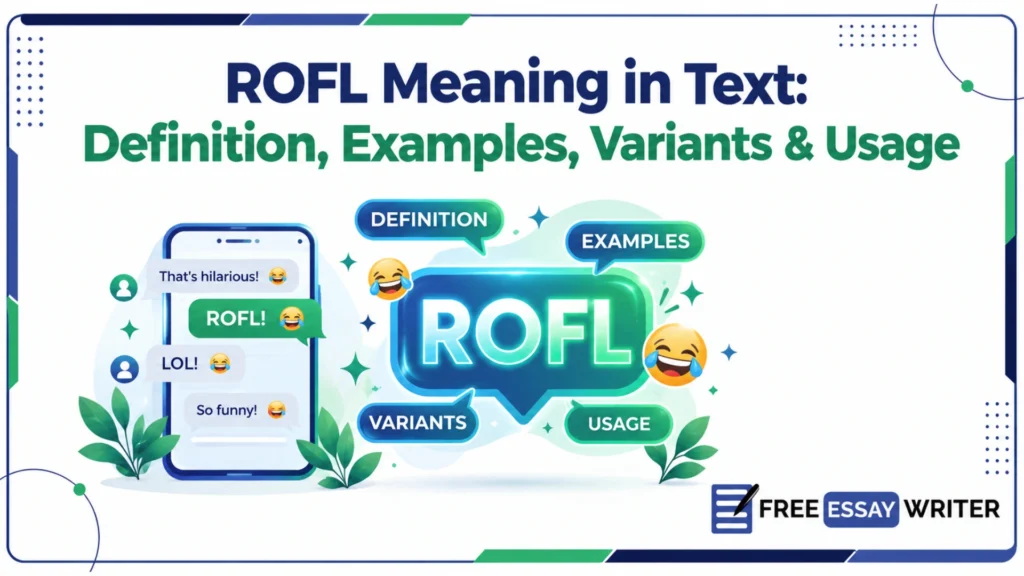
A friend sends a meme, and seconds later a reply pops up with four capital letters: ROFL. Plenty of readers recognize the vibe but pause over the exact words hiding behind those letters. The ROFL meaning in text looks simple, but its tone, history, and variants deserve a closer look.
This guide explains what ROFL stands for, how people use it, and how to reply to it. It also compares ROFL with LOL, LMAO, and the rolling laughing emoji, so each choice fits the moment. Readers who enjoy shorthand like this may also like our guide on tldr meaning, another popular internet abbreviation.
By the end, the slang will read as clearly as any plain English sentence in a busy chat. The guide also covers replies, mistakes, workplace rules, and a quick quiz to test your new knowledge.
ROFL means “rolling on the floor laughing” and signals that something struck the sender as hilarious. People use it in texts, chats, and social media comments as a stronger version of LOL. Tone matters, though, because ROFL can also carry sarcasm when a joke plainly fell flat. Keep it out of formal emails, essays, and workplace messages to managers or clients.
ROFL stands for “rolling on the floor laughing,” a phrase that describes an exaggerated physical reaction to humor. Nobody rolls on any floor, of course, since the image paints laughter too strong to contain while seated. The acronym works as hyperbole, a playful exaggeration that tells the other person their joke landed hard.
Most people type it in capitals, though lowercase rofl appears often in quick and casual phone chats. Both spellings carry the same meaning, and capitals add a small touch of extra volume to the laugh. Some readers pronounce it as one word, “roffle,” while others spell out each letter during speech.
In simple words, ROFL is the text version of laughing so hard that standing up becomes impossible.
Here is a fast summary of the acronym and where it belongs in everyday writing:
| Item | Detail |
|---|---|
| Full form | Rolling on the floor laughing |
| Type | Internet slang acronym |
| Tone | Casual, playful, exaggerated |
| Strength | Stronger than LOL |
| Common spellings | ROFL or rofl |
| Best setting | Texts, chats, comments |
| Avoid in | Essays, formal emails, reports |
In short, ROFL belongs to relaxed conversations where a big burst of laughter fits the mood.
ROFL grew out of early online culture, where typing speed mattered more than polished grammar or spelling. Users on bulletin board systems, Usenet groups, and early chat rooms favored short acronyms for quick reactions. Most accounts place its rise around the late 1980s or early 1990s, though no confirmed first use exists.
The longer form ROTFL, which keeps the word “the,” likely circulated alongside it in those same early communities. Over time, many users dropped the T, probably because shorter acronyms travel faster in busy chat channels. The path below shows how the phrase shrank and later grew new branches:
rolling on the floor laughing
        ↓
ROTFL (early long form)
        ↓
ROFL (shorter, most common today)
        ↓
ROFLMAO, ROFLCOPTER, and 🤣 (later spinoffs)
Text messaging on early mobile phones gave ROFL a second life, since strict character limits rewarded short words. Today the acronym sits comfortably beside newer slang, although younger users often prefer emojis for the same reaction.
Typing on early keyboards and phone keypads took real effort, so writers looked for quick shortcuts everywhere. An acronym packs a full reaction into four letters and still reads clearly to regular chat users. Group identity also played a part, because shared slang signaled membership in a particular online community. Once enough people recognized ROFL, newcomers copied it so they could fit in with the regulars.
Humor travels well in short form, since a laugh needs no explanation once both people share it. That combination of speed, belonging, and fun explains why ROFL survived several generations of chat platforms.
These key characteristics separate ROFL from other laughter acronyms and casual slang terms:
People drop ROFL into a conversation when a message, meme, or story strikes them as hilarious. It can stand alone as a complete reply or sit inside a longer sentence with extra comments. Position slightly changes the effect, so the next three subsections cover the most common placements in chats.
A single ROFL works as a full answer when a friend shares something funny in a chat. The short reply tells the sender the story landed, without any need for extra words or explanation.
Friend: My cat knocked my phone into the fish tank during a video call.
You: ROFL
Many people pair the acronym with an emoji or repeat letters, such as ROFLLL, for added emphasis. The stretched version mimics laughter that keeps going, much like a long “hahaha” in a message.
Placing ROFL first shows an instant reaction before the writer adds a comment or follow up line.
ROFL, I can't believe you wore two different shoes to the interview.This order mirrors spoken conversation, where people laugh first and talk once they catch their breath. It also tells the reader that the comment after the acronym comes from a place of amusement.
At the end of a sentence, ROFL works like a laugh track playing after the main statement.
I tried to bake bread and set off every smoke alarm in the building roflWriters often skip punctuation here, since the acronym itself closes the thought with a laugh. This placement suits self deprecating stories, where the writer laughs at their own small disaster.
Examples make slang easier to read, so the cases below show ROFL across several common chat situations. Each one explains why the acronym fits and what message it sends to the other person.
Ali: Watched my dad try voice typing. It wrote "pickle" instead of "pick up."
Sara: ROFL, that is the best text I've read all week
Sara uses ROFL to show the story made her laugh hard, well beyond a polite smile. The reply also invites Ali to keep the joke going with more voice typing fails from his dad.
Player1: I jumped off the cliff thinking it was a shortcut 💀
Player2: rofl same, did it three times
Gamers type fast, so lowercase rofl appears often in match chats and voice channel text logs. Here the slang shows shared laughter at a mistake both players made during the same round.
Post: My toddler insisted on paying for groceries with a crayon.
Comment: ROFL 🤣 the confidence of toddlers is unmatched
Pairing ROFL with the rolling laughing emoji doubles the signal, which suits busy public comment sections. Comments like this also attract replies, since other readers often join the laughter with stories of their own.
Friend: I'll finish the project early this time, I promise.
You: ROFL, sure you will
Here ROFL mocks a promise the sender doubts, so the laughter carries playful disbelief instead of delight. Close friends read this as teasing, while strangers might take the same reply as rude or dismissive.
Mom: ROFL means really old folks laughing, right?
Son: Not quite, Mom, it means rolling on the floor laughing
Misreadings like this happen often in family chats, which creates its own round of laughter for everyone. Parents who ask about slang usually want to join the fun, so a friendly explanation works best.
Laughter acronyms sit on a rough scale, running from a light chuckle all the way to complete hysterics. LOL usually signals mild amusement, and many people type it out of habit after any friendly sentence. LMAO, short for “laughing my a** off,” pushes the intensity higher and includes mild profanity. ROFL sits near LMAO in strength but stays clean, so it suits mixed company much better.
| Acronym | Full form | Intensity | Profanity |
|---|---|---|---|
| LOL | Laughing out loud | Low | None |
| LMAO | Laughing my a** off | High | Mild |
| LMFAO | Laughing my f***ing a** off | Extreme | Strong |
| ROFL | Rolling on the floor laughing | High | None |
| ROFLMAO | Rolling on the floor laughing my a** off | Extreme | Mild |
The table shows that ROFL offers high intensity without the crude language found in LMAO and LMFAO. Readers who want more chat shorthand can check our guide on imo meaning, which covers another everyday acronym.
LOL has lost much of its original force, since many people type it as a friendly softener. A message like “ok lol” rarely means the writer laughed aloud at anything in the conversation. ROFL still carries weight, so readers usually take it as a sign of genuine laughter. Use LOL for small smiles and save ROFL for moments that earn a big laugh.
Both acronyms signal strong laughter, but LMAO includes a mild swear word in its full form. Teachers, parents, and some coworkers may frown at LMAO, while ROFL rarely raises any eyebrows. Choose ROFL when the audience is mixed and the joke deserves more than a quiet LOL.
ROFL has spawned a family of longer and sillier versions over several decades of online chatting. Each variant adds intensity, humor, or a dose of profanity to the original four letters.
| Variant | Full form | Notes |
|---|---|---|
| ROTFL | Rolling on the floor laughing | Older long form |
| ROFLMAO | Rolling on the floor laughing my a** off | Stronger, mild profanity |
| ROTFLMAO | Rolling on the floor laughing my a** off | Long form of ROFLMAO |
| ROFLOL | Rolling on the floor laughing out loud | Playful stacking |
| ROFLCOPTER | Joke variant of ROFL | Meme from early internet humor |
The table shows that most variants add emphasis and carry no new meaning beyond the original acronym.
ROFLCOPTER is a joke variant that pictures laughter spinning as fast as helicopter blades. It circulated in gaming forums and meme culture, often next to ASCII art drawings of little helicopters. Few people use it today, so it reads as nostalgic or deliberately silly in modern chats.
ROFLMAO combines ROFL with LMAO to create the strongest laughter signal in this whole acronym family. Because it contains mild profanity, it fits close friends better than school or work group chats. ROTFLMAO adds the T back, though the extra letter changes nothing about the overall meaning.
Unicode includes an emoji named Rolling on the Floor Laughing, shown as 🤣, a tilted laughing face. Many users now send this emoji instead of typing the acronym, especially on phones with quick keyboards. The face with tears of joy, 😂, looks similar but stays upright and reads slightly softer.
| Option | Format | Strength | Best use |
|---|---|---|---|
| ROFL | Text acronym | High | Typed chats, older audiences |
| 🤣 | Emoji | High | Mobile chats, quick reactions |
| 😂 | Emoji | Medium to high | Everyday funny moments |
| LOL | Text acronym | Low | Light, polite laughter |
Emojis and acronyms overlap here, so pick whichever matches the existing style of the chat.
ROFL itself contains no profanity, so the acronym is not inherently rude in casual settings with friends. Problems arise when context turns the laughter against someone or the setting demands formal language. A manager sharing bad news, for example, would not welcome ROFL as a reply from the team.
Laughter aimed at a person’s mistake, appearance, or pain can read as cruel instead of friendly. Sarcastic ROFL replies to serious statements often start arguments in group chats and comment threads. Do not reply with ROFL when someone shares a struggle, even if one line sounded funny.
Most workplaces expect clear and polished language in emails, reports, and messages to clients. Casual team chats sometimes allow slang, but writers should follow the tone their colleagues set first. Do not use ROFL in cover letters, academic essays, or official customer support replies.
| Setting | Fits? | Better choice |
|---|---|---|
| Text with friends | Yes | ROFL or 🤣 |
| Family group chat | Usually | ROFL or 😂 |
| Gaming chat | Yes | rofl |
| Team chat at work | Sometimes | haha or a reaction emoji |
| Email to a manager | No | A plain sentence |
| Academic essay | No | Formal wording |
| Customer support | No | A polite, clear reply |
In short, the closer the relationship, the safer ROFL becomes inside a message.
The ROFL meaning stays the same whether a girl, a guy, or anyone else sends it. Some readers search this question when they hope a laugh hints at romantic interest from a crush. A lone ROFL says the message was funny, and it rarely signals anything beyond amusement.
Quick replies, repeated laughter, and follow up questions can suggest interest, but context matters far more. Reading a crush’s ROFL as flirting without other signals usually leads to disappointment or confusion. A laugh is a laugh, so judge interest by the whole conversation and never by one acronym.
The acronym keeps the same meaning across apps, but each platform gives it a slightly different home. The short sections below explain how ROFL usually appears on three popular messaging and social apps.
On Snapchat, ROFL usually appears as a caption or chat reply to a funny snap from a friend. Captions stay short, so the four letters fit neatly over a photo or a short video clip.
Instagram users often drop ROFL in comments under memes, reels, and funny pet videos from creators. Many pair it with 🤣 or 😂, which makes the reaction stand out in long comment threads.
WhatsApp group chats often host ROFL replies among friends, cousins, and classmates sharing jokes after school. Family groups sometimes include older relatives, so a quick explanation may help them follow the conversation.
Millennials and older Gen X users grew up typing ROFL in chat rooms and early instant messengers. Many Gen Z and younger users favor emojis like 💀 or 😭 to show the same strong laughter. Because of this split, ROFL can read as retro, which some users enjoy for extra comic effect.
Platforms also influence how often the acronym appears in daily online conversation among different user groups. Comment sections on Facebook and YouTube still show ROFL fairly often, especially from older audiences. On TikTok, users more often pair laughing emojis with short phrases such as “I’m crying” or “I’m dead.”
Gaming chats and long running forums keep ROFL alive, since fast typing culture never fades there. Standard SMS chats see the acronym mainly between friends who grew up using it in the 2000s.
English speakers are far from alone in shrinking laughter into quick letters and numbers on screens. Other languages built their own versions, often based on local sounds or words for laughing.
| Language | Laughter shorthand | Why it works |
|---|---|---|
| Spanish | jajaja | J sounds like English H |
| Portuguese (Brazil) | kkkk or rsrs | Laugh sound, short for risos |
| Korean | ㅋㅋㅋ | The letter makes a k sound |
| Japanese | www | Short for warau, to laugh |
| Thai | 555 | Five is pronounced ha |
| French | mdr | Mort de rire, dying of laughter |
The table shows that nearly every culture finds a quick, playful code for laughter in text. ROFL sits in that same tradition, built from English words and an image of uncontrollable laughter.
A ROFL reply usually means the joke worked, so the conversation can keep its playful and relaxed tone. Several reply styles fit, depending on how the writer wants the chat to continue from there.
Add another funny detail or a fresh punchline to stretch the laughter a little longer.
Wait, it gets worse. The cat did it again five minutes later.A quick “haha, right?” or a matching emoji shows shared amusement without any extra effort from the writer. This reply style suits busy group chats, where long messages can bury the original joke.
Playful replies such as “thank you, I’m here all week” accept the compliment with a wink. This option works best between close friends who enjoy a bit of mock arrogance in banter.
If the ROFL seems sarcastic, a short question such as “was that funny or awkward?” clears up confusion. Asking calmly keeps the chat friendly and prevents a small misread from growing into an argument.
The steps below turn the acronym into a reliable reaction that lands well with almost any casual audience.
Before typing ROFL, check whether the current conversation sounds lighthearted or serious in its overall tone. A friend venting about a breakup does not need laughter, even if one line sounded funny.
Think about the age, relationship, and slang habits of the person on the other end of the chat. Older relatives may need a quick explanation, while gaming friends will read it instantly without help.
Match the acronym to the laugh, with LOL for small giggles and ROFL for big ones. Saving the stronger word for bigger moments keeps every reaction believable across a long conversation.
Capital letters add volume, while lowercase reads relaxed and slightly understated in quick replies. Neither option is wrong, so follow the style already used in the conversation by other people.
A short phrase after ROFL, such as “ROFL, the cat’s face,” points to the exact joke. This detail prevents confusion when several messages arrive at once in a busy group chat.
Read the message once more and ask whether a stranger could mistake it for open mockery. Change the wording if the laughter could hurt someone or seem out of place in the chat.
These tips help the acronym land well and keep every casual conversation friendly:
Students sometimes slip slang into essays or emails to professors after hours of casual texting with friends. Formal readers may judge the writer as careless, which can cost grades, trust, or professional credibility.
Replying ROFL to bad news, illness, or loss can seem cold and damage a relationship fast. Pause and reread the message before reacting, especially when it arrives in a crowded group chat.
Quick readers sometimes mix up ROFL with ROFLMAO or assume it means something else entirely. Checking the full form first avoids awkward replies built on the wrong meaning of the letters.
Typing ROFL after every message weakens its impact, much like a joke repeated ten times in one evening. Readers eventually doubt the laughter is sincere and may stop sharing funny stories with that person.
A ROFL that follows a boastful or unrealistic claim often carries sarcasm instead of honest admiration. Missing that signal can lead to an earnest reply that makes the whole chat awkward for everyone.
| Signal | Likely meaning | First check |
|---|---|---|
| ROFL after a funny story | Sincere laughter | Nothing, enjoy it |
| ROFL, sure, after a promise | Sarcasm | Sender’s usual style |
| rofl with no context in a group | Reaction to an earlier message | Scroll up for the joke |
| ROFL after serious news | Misread tone or nervous laughter | Ask gently what they meant |
The table pairs each ROFL signal with a quick first check, so readers can decode the tone fast.
Slang knowledge helps students and writers read online sources, comments, and social posts with accuracy. Researchers studying online behavior often quote forum posts full of acronyms like ROFL and LOL. A writer who misreads one acronym can misquote a source or misjudge its tone entirely.
Fiction writers also use slang to make dialogue sound authentic for characters who text or game. A teenage character who types ROFL might seem retro, which adds humor to a scene. Journalists covering internet culture face the same challenge, since one wrong reading can change a quoted message.
Learning acronyms like ROFL brings several clear benefits for readers and writers alike:
Academic essays sometimes discuss internet language, digital culture, or communication habits among young people today. In those cases, writers mention ROFL as a subject of analysis, never as a personal reaction.
Put the acronym in quotation marks on first use and spell out its full form right away. Explain how it works in context before analyzing its social or linguistic role in online communication. Here is a sample sentence from an essay that follows those formal writing rules:
In online chats, the acronym "ROFL" (rolling on the floor laughing) signals intense amusement and often replaces longer written responses.This method keeps the tone formal while still showing clear knowledge of the slang and its use. Cite real chat examples carefully, and remove usernames when quoting private or semi public conversations.
The four scenarios below test whether ROFL fits each situation, with a short explanation after every case.
A friend sends a clip of a dog stealing a whole pizza from the kitchen counter at night. ROFL fits perfectly here, because the moment is harmless, silly, and clearly meant to amuse everyone.
A classmate texts that they failed a major exam after weeks of late night studying for it. ROFL would sting here, so a supportive message works far better than any laughter acronym.
A manager posts a light joke about the office coffee machine breaking again this week. A reaction emoji or a short “haha” fits better than ROFL in most workplace channels.
A grandparent replies ROFL to news about a family pet’s surgery, thinking the letters mean sympathy. Gently explain the real meaning, since the mix up probably comes from an honest and innocent mistake.
Run through this short checklist before sending ROFL in any casual conversation online:
The ROFL meaning in text is rolling on the floor laughing, a playful sign of intense amusement. People send it when a message, meme, or story strikes them as hilarious in a chat.
Yes, ROFL signals stronger laughter than LOL, which many people now use as a mild softener. ROFL suggests the sender laughed hard, while LOL often means a light chuckle or polite smile.
ROFL and ROTFL both mean rolling on the floor laughing, though ROTFL keeps the word “the.” ROFL is shorter, so it appears far more often in modern texting and online chats.
No, ROFL contains no profanity and stays safe for most casual conversations with friends and family. Variants like ROFLMAO add a mild swear word, so they suit closer friends and relaxed chats.
ROFL fits relaxed team chats with friendly coworkers, but it does not belong in formal emails. Follow the tone of workplace messages and choose plain language with managers, clients, or partners.
Reply to ROFL by adding another funny detail, laughing along, or accepting the compliment with humor. If the tone seems sarcastic, a short question clears up any confusion quickly and calmly.
ROFL sounds slightly retro to many younger users, who often prefer emojis such as 🤣 or 💀. Older users and gaming communities still use the acronym regularly in their daily chats.
Lowercase rofl means the same as ROFL, rolling on the floor laughing, with a more relaxed tone. Capital letters add volume, while lowercase suits quick, casual replies typed on phones.
Yes, ROFL can carry sarcasm when it follows an unrealistic claim or a joke that fell flat. Context and the sender’s usual style reveal whether the ROFL laughter is sincere or mocking.
The 🤣 emoji, officially named Rolling on the Floor Laughing, matches the ROFL meaning in text closely. Many people send it as a quick visual replacement for the four letter acronym.
ROFL packs a full belly laugh into four letters, and that efficiency explains its long life online. Knowing the ROFL meaning in text helps readers decode chats, reply with confidence, and avoid awkward misreadings. Use it with friends who enjoy big laughs, and keep every piece of formal writing free of slang.
Explore more texting slang and writing guides on Free Essay Writer, where every tool stays free.

Written by
Part of the Free Essay Writer team, sharing practical advice on writing better essays, faster, and for free.
More from this authorOctober 13, 2026 · Moeed
A classmate mentions an LLM during a group project, and half the group nods without knowing the term. A search…
Moeed
Read more
October 13, 2026 · Moeed
A friend texts “IMO the sequel beats the original,” and the three letters stall the chat. The IMO meaning looks…
Moeed
Read more
October 13, 2026 · Moeed
A paycheck lands in a bank account overnight, and the statement lists it as an “ACH credit.” The ACH meaning…
Moeed
Read more
Generate a full essay free, then polish it with the built-in toolkit.
Start writing free